
| Quick Summary |
|---|
Choosing the right embroidery needle helps protect fabric, reduce thread problems, and improve stitch quality.
|
A design can be digitized well, the machine can be threaded correctly, and the fabric can be hooped firmly, yet the stitch-out may still show thread breaks, skipped stitches, or visible holes. The needle often plays a bigger role than expected.
Therefore, choosing the right needle means checking machine compatibility, fabric, thread, needle size, point, and design needs. For cleaner results, Digitizing Buddy also provides reliable embroidery digitizing support for designs prepared with real stitching conditions in mind.
- Quick Answer: How to Choose the Best Needle for an Embroidery Machine?
- What Makes an Embroidery Machine Needle Different?
- What Do the Numbers 75/11 and 90/14 Mean on Embroidery Needles?
- What Are the Top Embroidery Machine Needle Brands?
- How to Match an Embroidery Needle to Fabric and Thread?
- Sharp or Ballpoint: Which Needle Should You Use?
- Why Does an Embroidery Machine Needle Keep Breaking?
- Is the Needle Really the Problem, or Is It the Embroidery Design?
- Why Is My Embroidery Machine Skipping Stitches or Shredding Thread?
Quick Answer: How to Choose the Best Needle for an Embroidery Machine?
Choose a needle your embroidery machine supports, then match the size and point to your fabric and thread. Finer thread usually works with a finer needle, while heavier materials may need a larger size. Always follow the machine manual because supported needle systems vary.
Check These Factors
- Machine compatibility
- Fabric type
- Thread thickness
- Needle size
- Needle point
What Makes an Embroidery Machine Needle Different?
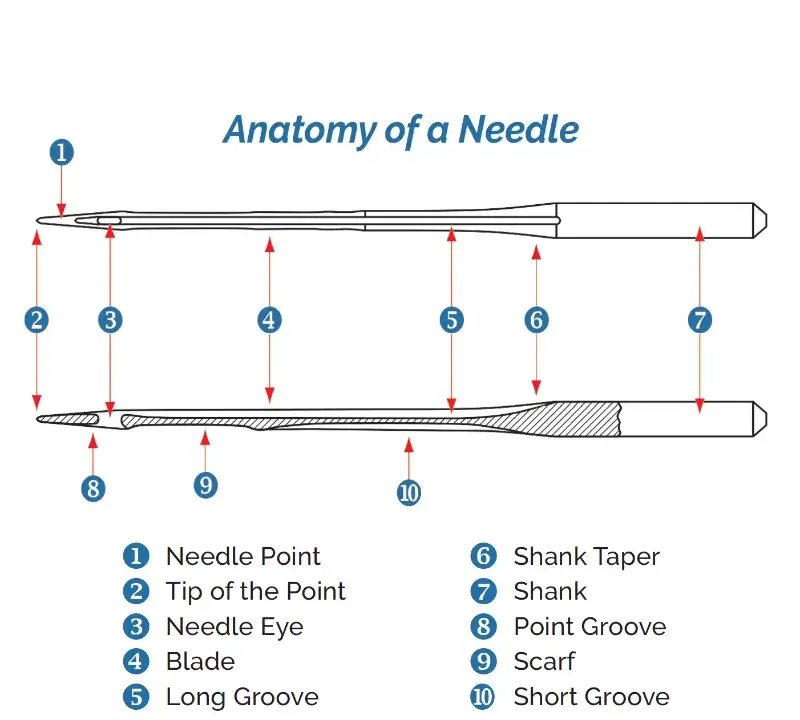
An embroidery machine needle has the same basic parts as other machine needles. The shank secures it, while the shaft gives it strength. The groove guides the thread, the scarf gives the hook room to catch the thread loop, the eye carries the thread, and the point enters the fabric.
However, embroidery needles often have an enlarged eye, a wider groove, and a special scarf. These features reduce friction and help decorative thread pass more smoothly.
Can You Use a Regular Sewing Needle in an Embroidery Machine?
Sometimes, embroidery machines can accept sewing needles, while specific models may also list them as suitable for embroidery. However, this does not apply to every machine. Always use the needle system and size listed in your manual. An embroidery specific needle can offer better thread protection because its eye and groove give decorative thread more room to move.
What Do the Numbers 75/11 and 90/14 Mean on Embroidery Needles?
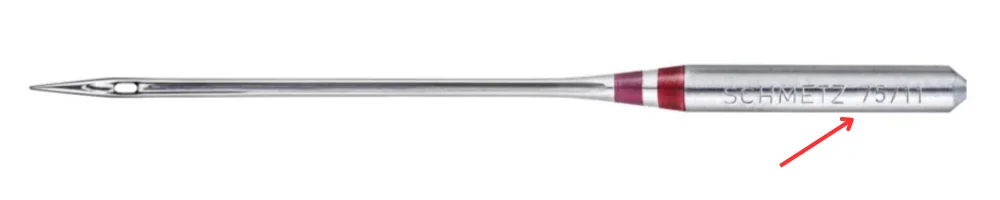
Needle numbers such as 75/11 and 90/14 show the needle size in two systems. The first number uses the European metric system, while the second uses the American sizing system. A 75/11 needle is finer than a 90/14 needle.
The metric number also relates to blade diameter. For example, NM 75 means the needle blade is about 0.75 mm wide. As the number rises, the needle becomes thicker. Lower numbers indicate finer needles.
General Needle Size Guide
| Needle Size | General Use |
|---|---|
| 65/9 to 70/10 | Fine or lightweight applications |
| 75/11 | Common starting size for machine embroidery |
| 80/12 | Medium weight or slightly heavier applications |
| 90/14 | Heavy fabrics, thicker materials, or some specialty applications |
However, this chart is only a starting point. The right size also depends on your machine, fabric, thread, stabilizer, and embroidery job. Some machine guidance recommends 75/11 for standard embroidery and 90/14 for heavier materials such as denim or puffy foam.
Using a needle that is too fine for heavy fabric can cause bending, breakage, skipped stitches, or puckering.
What Are the Top Embroidery Machine Needle Brands?
Several trusted manufacturers produce needles for machine embroidery. However, no single brand works best for every machine or project. Compare the needle system, size, point, and intended use before choosing.
SCHMETZ
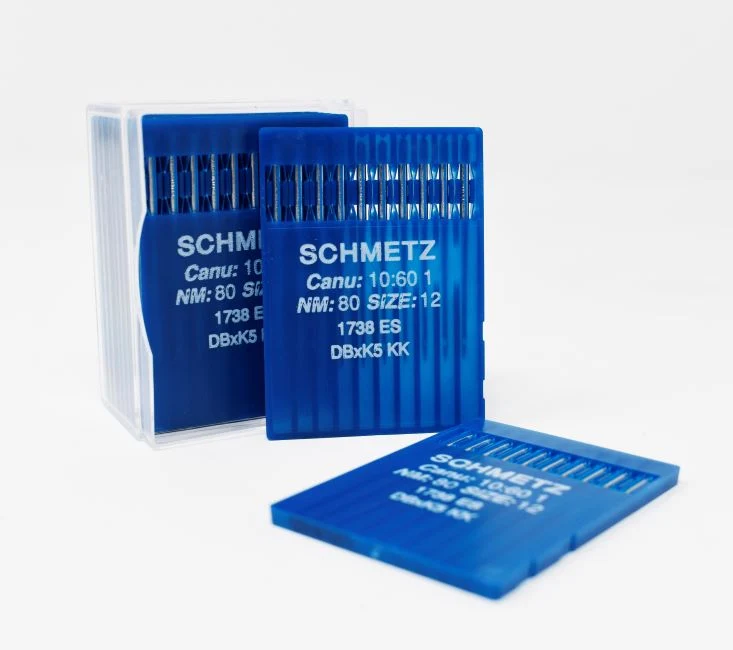
SCHMETZ is widely used for home machine embroidery. Its embroidery needles are designed to help decorative thread move smoothly.
Key features include:
- Enlarged eye for embroidery thread
- Wide groove to reduce thread friction
- Medium ball point for many embroidery fabrics
- Specialty coated options for demanding materials
Organ Needles
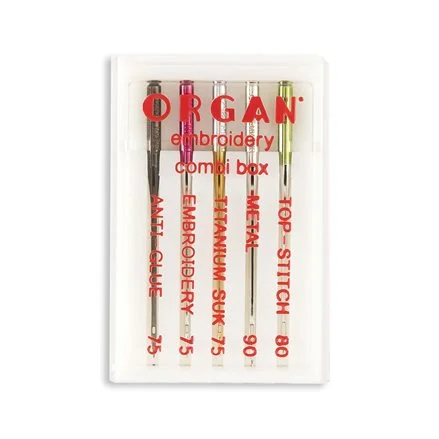
Organ is a long-established Japanese needle manufacturer with options for home and production machines.
Its range includes:
- Needles for different machine systems
- Various sizes and point styles
- Options for embroidery and specialty applications
Always confirm the exact needle system before use.
Groz Beckert
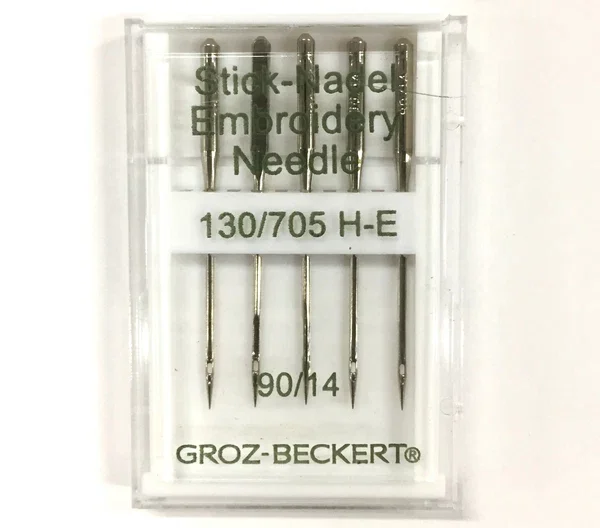
Groz Beckert is especially relevant for commercial and industrial embroidery equipment.
Common benefits include:
- Needle systems for multihead embroidery machines
- Different point styles for specific materials
- Options made for demanding production environments
Specialty Needles
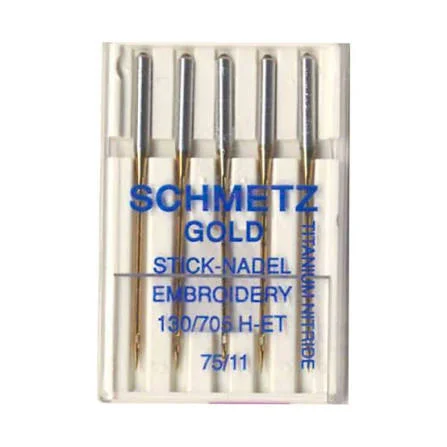
Some brands also offer coated options for demanding work. For example, SCHMETZ Embroidery Gold needles use a titanium nitride coating for better wear resistance and are designed for coarse or densely woven fabrics.
Which Needle Brand Should You Choose?
Do not choose by brand name alone. Match the needle system, size, point, thread, fabric, and project requirements to your machine. Even a premium needle can cause poor results when it does not suit the embroidery setup.
How to Match an Embroidery Needle to Fabric and Thread?
The right needle should move cleanly through the fabric while giving the thread enough room to pass through the eye. Match the needle to both fabric and thread.
1. Lightweight and Delicate Fabrics
Use a finer needle for lightweight fabrics when your machine supports it. An oversized needle can leave holes, pull delicate fibers, or create a rough finish.
2. Medium Weight Woven Fabrics
For many standard embroidery jobs, 75/11 is a useful starting size. However, check the thread weight, fabric construction, and machine manual before stitching.
3. Knits and Stretch Fabrics
Knits need extra care because their fibers form loops. A rounded or ballpoint needle can move between those loops instead of cutting through them. Use this point style only when it suits your machine and application.
4. Denim, Caps, Thick Fabrics, and Foam
Heavier materials place more stress on fine needles. Therefore, a larger or stronger needle may work better. Some manufacturer guidance recommends 90/14 for heavyweight materials such as denim and puffy foam, but this is not a universal rule.
What Needle Should You Use for Thick or Specialty Embroidery Thread?
Thread thickness also affects needle choice. Thick or specialty embroidery thread needs enough space to pass through the eye without excessive rubbing.
As a result, an eye that is too small can increase friction and contribute to fraying or thread breaks. Embroidery needles often use an enlarged eye and wider groove to help decorative thread move smoothly.
You can also watch this beginner-friendly video to see how to select the right embroidery machine needle for different needs.
Sharp or Ballpoint: Which Needle Should You Use?
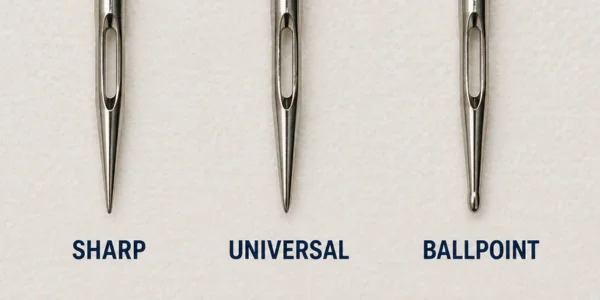
The right needle point depends mainly on how the fabric is built. Woven and knit fabrics react differently when the needle enters them, so choosing the correct point can improve stitch quality and reduce fabric damage.
Sharp Point Needles
Sharp needles have a pointed tip that penetrates fabric directly. They work well on many woven or tightly constructed materials where the needle needs to pass cleanly through the fibers.
They are often useful for:
- Firm woven fabrics
- Tightly woven materials
- Designs that need precise penetration
Ballpoint Needles
Ballpoint needles have a more rounded tip. Instead of cutting through knit loops, the point pushes between them.
They are commonly suited to:
- Knitted fabrics
- Stretch materials
- Fabrics that can snag or develop runs
Using the wrong point on knits can contribute to skipped stitches or damaged fibers.
Standard Embroidery Needles
Many embroidery needles use a slightly rounded or light ball point. They also feature an enlarged eye and wider groove to give embroidery thread more room to move.
In short, choose the needle point according to fabric structure, not just needle size. Woven and knitted materials do not respond to needle penetration in the same way.
Why Does an Embroidery Machine Needle Keep Breaking?
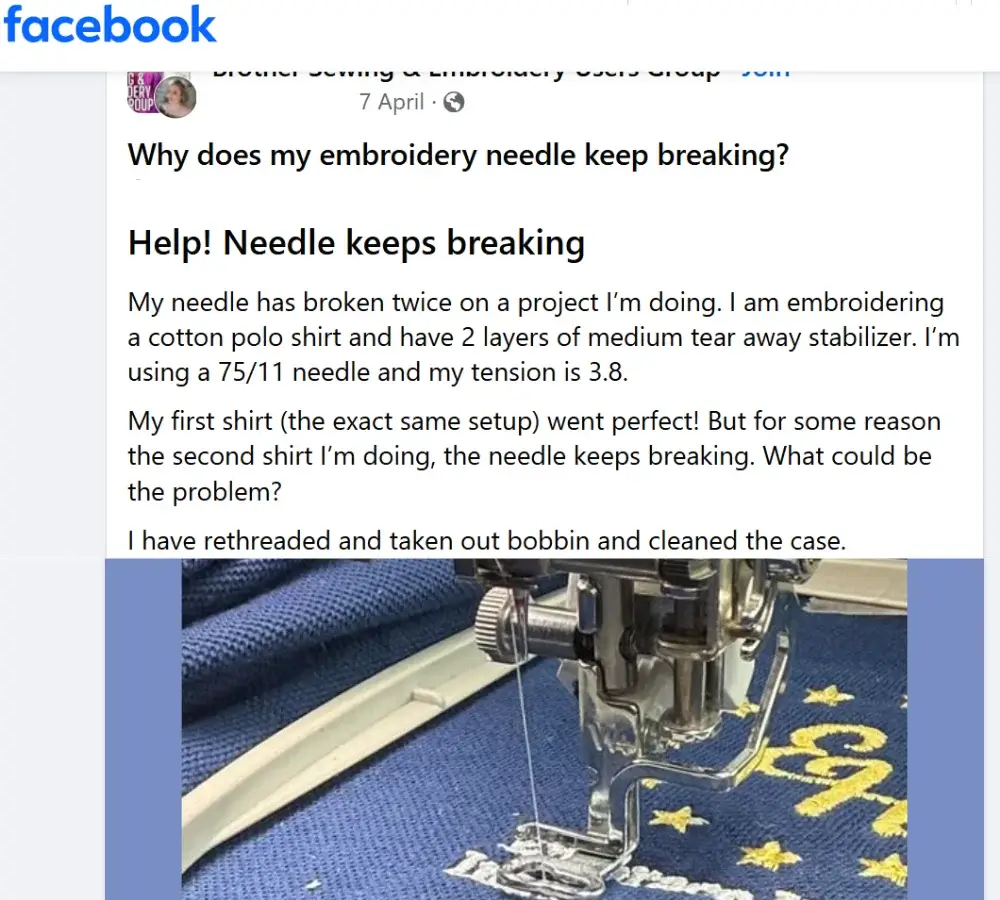
A needle that keeps breaking usually points to a setup, threading, fabric, design, or machine problem. Replacing the needle alone will not help if the main cause remains.
Common Causes of Needle Breakage
- Bent, dull, or damaged needle
- Wrong needle size for the fabric
- Needle inserted incorrectly
- Upper thread tension set too tight
- Thread caught or tangled in its path
- Loose hooping or poor stabilization
- Needle striking the presser foot or needle plate
- Very short or closely packed stitches
- Excessive stitch density
- Machine timing or another mechanical issue
Therefore, start by replacing any damaged needle and checking its size and position. Also inspect threading, tension, hooping, and stabilizer before running the design again.
Can the Embroidery File Cause Needle Breaks?
Yes. A poorly prepared stitch file can put extra stress on the needle. Very short stitches, excessive density, or too many penetrations in one small area can increase resistance during stitching.
If needles keep breaking after the machine setup checks out, review the design for crowded stitches, unnecessary density, and unsuitable stitch settings.
Is the Needle Really the Problem, or Is It the Embroidery Design?
Replacing the needle again and again will not fix every embroidery problem. If the machine setup, thread, and needle are correct, the stitch file may be creating too much stress during sewing.
Design Problems That Can Affect Stitching
Watch for:
- Excessive stitch density
- Very short stitches
- Stitches crowded in one area
- Poor stitch sequencing
- Too many needle penetrations in one spot
- Settings that do not suit the fabric
- Resizing without properly adjusting the stitches
For example, shrinking a design without recalculating its stitches can pack the same amount of stitching into a smaller space. As a result, the needle may struggle to move cleanly through the area.
If the needle checks out but problems continue, Digitizing Buddy can help prepare a cleaner, fabric-ready embroidery file for smoother production.
Why Is My Embroidery Machine Skipping Stitches or Shredding Thread?
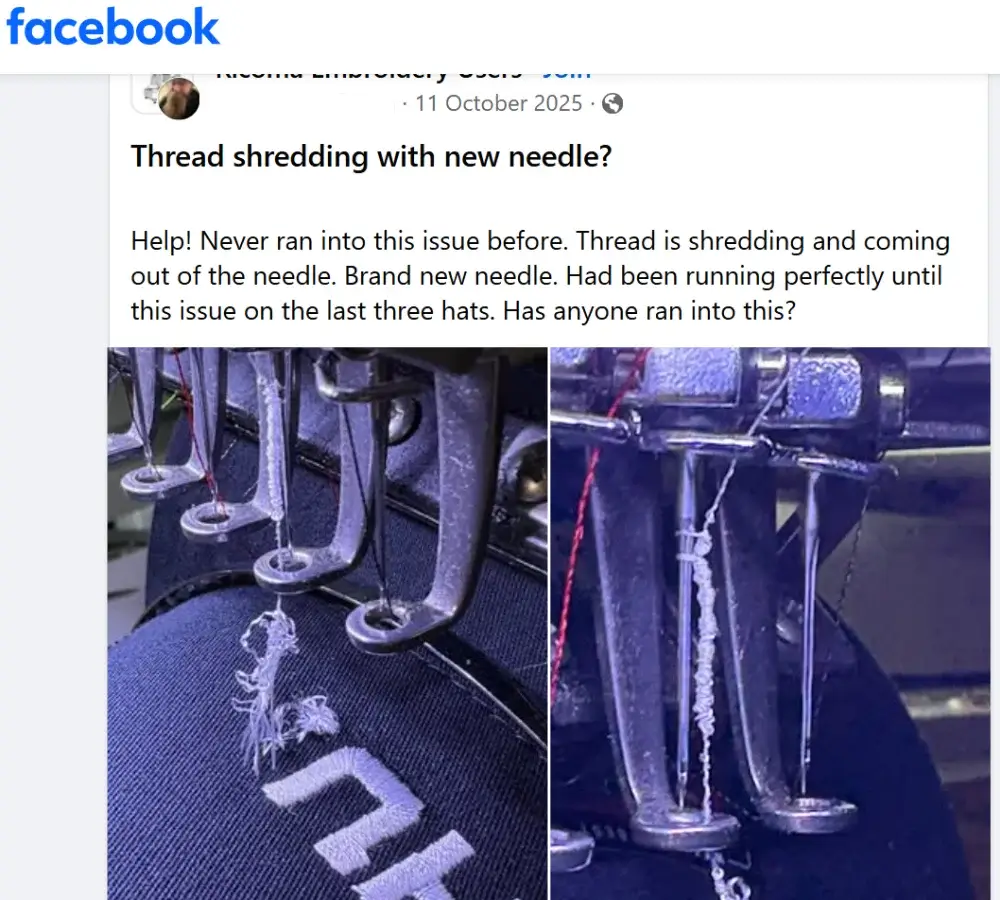
Skipped stitches and shredded thread often point to a needle or setup problem. However, do not blame the needle alone. Threading, tension, and machine condition can cause similar symptoms.
Skipped Stitches
Check the needle for:
- A dull or bent point
- Wrong size for the fabric
- Incorrect point style
- Improper installation
- Visible damage or wear
A worn needle or unsuitable point can prevent the machine from forming stitches correctly.
Thread Shredding or Fraying
The thread can fray when it faces too much friction while moving through the needle and machine.
Common causes include:
- Needle eye that is too small
- Worn or damaged needle
- Wrong needle type
- Incorrect threading
- Excessive thread tension
- Burrs on the needle or machine parts
The thread should move freely through the needle eye.
Therefore, if a fresh, correctly sized needle does not solve the problem, inspect the threading, tension, and machine condition before stitching again.
How Often Should You Change an Embroidery Machine Needle?
There is no fixed replacement time that works for every embroidery project. As a general guide, consider changing the needle after about 6 to 8 hours of stitching. However, heavy fabrics, dense embroidery designs, and demanding projects can wear a needle faster.
Change the Needle Sooner If You Notice
- Skipped or uneven stitches
- Frequent thread breaks
- Fabric snagging or pulling
- A visibly bent needle
- A dull or damaged point
- Poor stitch formation
- A needle strike or hard impact
Therefore, check the needle regularly instead of relying only on stitching hours.
Quick Embroidery Needle Selection Checklist
A quick check before stitching can prevent thread breaks, skipped stitches, fabric damage, and poor stitch quality.
Check Before You Start
- Confirm the needle system matches your machine
- Use a straight, undamaged needle
- Match the needle size to the fabric
- Make sure the eye suits the thread thickness
- Choose the right point for woven or knit fabric
- Install the needle correctly
- Use a suitable stabilizer
- Check stitch density for the fabric
- Test the design on the same fabric and thread combination
A short test stitch can catch problems before full production begins.
Final Thoughts
Choosing the right needle can make a big difference in stitch quality, thread performance, and fabric protection. Check the needle system, size, point, fabric, thread, and design before you start. Also, replace worn needles and test your setup when problems appear.
However, the needle is only one part of a clean stitch-out. If your design needs better density, spacing, or stitch settings, contact Digitizing Buddy for professional embroidery digitizing and get a free quote today.
Frequently Asked Questions
Start with a needle system that your machine supports. A 75/11 needle works as a common starting point for many standard embroidery projects, while heavier fabrics can require a larger needle. Always match the size to the fabric and thread.
The two numbers show the needle size in European and American systems. A 75/11 needle is finer than a 90/14. As the numbers increase, the needle becomes thicker and better suited to heavier applications when the machine allows it.
Choose the point based mainly on the fabric. Sharp points suit many woven and tightly constructed fabrics, while ballpoint needles work between the loops of many knits and stretch fabrics instead of cutting directly through them.
Repeated needle breaks can come from a bent needle, wrong size, incorrect installation, tight tension, poor threading, weak stabilization, or the needle striking another machine part. Dense or crowded stitching can also add stress during embroidery.
There is no single replacement schedule for every project. Change the needle when it becomes bent, dull, damaged, or starts causing skipped stitches, thread problems, or poor stitch quality. Heavy or demanding embroidery can wear needles sooner.