
| Quick Summary |
|---|
The best blank shirts and hats for embroidery combine stable fabric, suitable construction, and proper digitizing.
|
A logo can look perfect on your screen but turn out puckered, stretched, or uneven after embroidery. Often, the problem starts with the blank shirt or hat, not just the design.
Different fabrics and cap styles react differently to stitches. Shirt weight, fabric stretch, hat panels, and stitch density all affect how clean your logo looks. So, choosing the right blank matters before you start sewing.
From Gildan and Comfort Colors shirts to Richardson caps, we’ll compare reliable options, where to buy them, and what to check before ordering. Once you’ve chosen your blank, share your logo and garment details for professional embroidery digitizing services tailored to your fabric and design.
- Best Shirts and Hats for Embroidery: Quick Picks
- What Makes a Shirt or Hat Good for Embroidery?
- Best Blank T-Shirts for Embroidery
- Best Blank Polo Shirts for Embroidered Logos
- Best Blank Hats and Caps for Embroidery
- Where to Buy Blank Shirts and Hats for Embroidery in the USA
- Common Embroidery Problems With Blank Shirts and Hats
- What Do Professional Digitizers Recommend When Choosing Blanks?
- How Embroidery Digitizing Affects Shirts and Hats
Best Shirts and Hats for Embroidery: Quick Picks
The right blank depends on your design, comfort needs, and budget. Medium-weight shirts often suit everyday logos, while structured hats offer a firmer front for stitching. Here are six useful options to compare.
| Best For | Recommended Blank |
|---|---|
| Affordable T-shirts | Gildan 5000 |
| Premium casual shirts | Comfort Colors 1717 |
| Soft, lightweight shirts | BELLA+CANVAS 3001 |
| Corporate polos | Port Authority K100 |
| Trucker caps | Richardson 112 |
| Flat-bill snapbacks | Yupoong 6089M |
However, these are starting picks. Always test your logo on a sample before buying in bulk.
What Makes a Shirt or Hat Good for Embroidery?
A good embroidery blank holds its shape while the machine stitches. Yet fabric alone is not enough. The embroidery design, backing, and hooping also matter.
Fabric Type, Weight, and Stability
Cotton knits feel soft but can stretch under stitches. Polyester shirts may also stretch. Cotton and polyester blends vary, so check the fabric weight and feel before buying.
Medium to heavyweight shirts often give filled logos a steadier base. Still, dense stitches can cause puckering without the right backing and digitizing. For stretchy T-shirts, cut-away stabilizer usually provides better support.
Garment Construction and Embroidery Placement
Also, check seams, pockets, thick textures, and how easily you can hoop the garment. A flat, open area makes placement easier.
Structured caps have firmer fronts, while unstructured caps need more support. Five-panel caps usually have no front center seam. Six-panel caps often do, which can affect small letters and stitches. Always check the usable embroidery area before ordering.
Best Blank T-Shirts for Embroidery
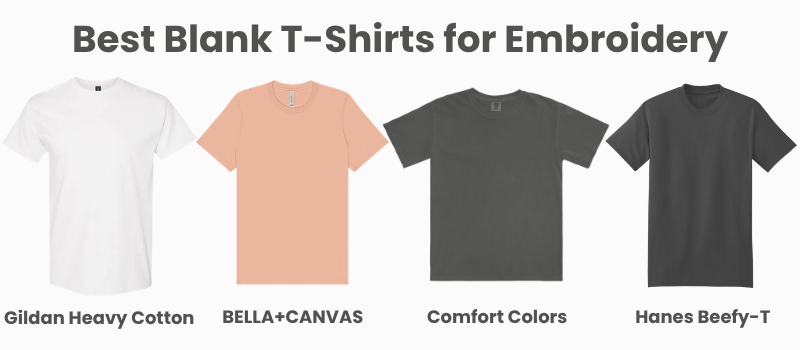
The right blank T-shirt depends on your budget, logo size, and comfort needs. Some suit simple left chest logos, while others offer a heavier, more premium look.
1. Gildan Heavy Cotton 5000—Best Budget Option
Gildan 5000 uses 5.3-ounce fabric, with 100% cotton in standard solid colors. Its classic fit makes it a practical choice for beginner practice, events, and bulk orders.
Despite the Heavy Cotton name, it is a midweight shirt, not the thickest option here. Use cut-away backing on this knit, and avoid overly dense designs to reduce puckering.
2. BELLA+CANVAS 3001—Best for Soft, Retail-Style Shirts
BELLA+CANVAS 3001 uses soft, 4.2-ounce Airlume combed and ring-spun cotton in standard solid colors. Its modern retail fit suits small chest logos, brand merchandise, and everyday wear.
However, this lightweight knit can stretch under heavy stitching. Choose a lighter design, avoid pulling the fabric tight in the hoop, and use cut-away stabilizer.
3. Comfort Colors 1717—Best for Premium Casual Merchandise
Comfort Colors 1717 features 6.1-ounce ring-spun cotton, a relaxed fit, and a garment-dyed finish. It is a good option for clothing brands and merchandise with a lived-in look.
The thicker feel can support many logo styles, but weight alone cannot prevent puckering. Also, garment dyeing may create small color differences. Test the embroidery and wash a sample before a large order.
4. Hanes Beefy-T 5180—Best for a Classic, Substantial Tee
Hanes Beefy-T 5180 uses 6.1-ounce cotton jersey in its standard colors. Its roomy cut and sturdy feel suit classic workwear, club shirts, and everyday merchandise.
It offers a heavier alternative to lightweight retail tees. Still, use proper backing and match stitch density to the design rather than assuming thick fabric needs no support.
For another soft option, consider Next Level 3600. Its 4.3-ounce combed ring-spun cotton suits smaller logos, with similar care needed for stabilization.
Best Blank Polo Shirts for Embroidered Logos
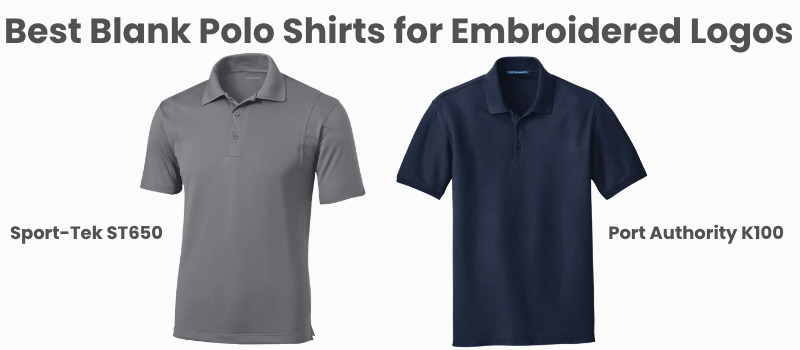
Polo shirts are popular for company uniforms, staff clothing, and promotional events. Their collars give embroidered logos a clean, professional look. However, fabric texture and weight affect stitch quality.
1. Port Authority K100—Best for Corporate Uniforms
The Port Authority K100 uses 4.4-ounce, 60/40 cotton and polyester pique fabric. Its classic style suits matching employee uniforms and left-chest company logos.
Because pique has a textured surface, tiny letters and thin lines may sink into the fabric. Proper underlay and backing help keep details clear.
2. Sport-Tek ST650—Best for Performance Wear
The Sport-Tek ST650 features 3.8-ounce, 100% polyester tricot. Its smooth, moisture-wicking fabric suits active staff, outdoor events, and comfortable work uniforms.
However, this lightweight material needs careful hooping and suitable backing to reduce puckering. Avoid overly dense logos.
In comparison, textured pique offers a classic polo look, while smoother performance fabric feels lighter but requires careful stabilization during embroidery.
Best Blank Hats and Caps for Embroidery
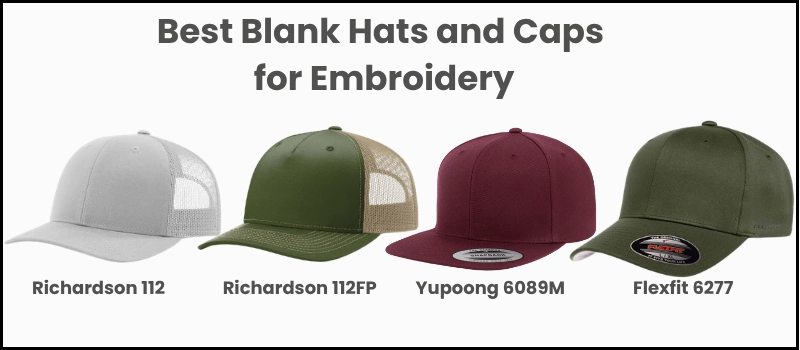
Choosing the right cap involves more than style. Front panels, crown height, seams, and fabric support all affect embroidery results. Here are four popular options for different projects.
1. Richardson 112—Best for Classic Trucker Hats
Richardson 112 features a structured, six-panel design with a cotton-polyester front and breathable mesh back. It suits business logos, team merchandise, and outdoor brands.
However, its front center seam can affect small letters and fine details. Proper placement and cap-specific digitizing help keep stitches aligned.
2. Richardson 112FP—Best for a Seamless Front Panel
Richardson 112FP offers a five-panel design with no vertical front seam. This creates a smoother area for centered logos and detailed embroidery.
Still, the curved crown requires proper framing, backing, and stitch settings. A seamless front does not guarantee perfect results with every design.
3. Yupoong 6089M—Best for Flat-Bill Snapbacks
Yupoong 6089M features a structured, high-profile crown and six-panel construction. Its acrylic-wool blend and flat bill make it popular for streetwear and fashion brands.
The taller crown provides a bold appearance. However, always measure the usable embroidery area and avoid placing small details too close to the bill or center seam.
4. Flexfit 6277—Best for Fitted Baseball Caps
Flexfit 6277 has a structured, mid-profile crown and stretch-fitted design. Its smooth appearance suits sports teams, company merchandise, and everyday wear.
Because the fabric contains stretch fibers, secure the cap properly to reduce movement and stitch misalignment.
For a softer style, unstructured dad caps also work with smaller, lighter logos. However, their flexible front panels often need extra support.
Before ordering, check your machine’s cap frame limits and test a sample.
Where to Buy Blank Shirts and Hats for Embroidery in the USA
Once you choose a shirt or cap, compare suppliers before ordering. Some sell to everyone, while others serve businesses only.
Wholesale Distributors for Embroidery Businesses
S&S carries shirts, polos, and caps from many brands. Business accounts get wholesale pricing, while individual shoppers pay retail prices. There is no minimum order quantity.
SanMar sells to registered apparel resellers and decorators. Opening an account requires a state sales tax license and the applicable resale certificate. It does not sell to the general public.
Where Can Beginners Buy Blanks Without a Wholesale Account?
Jiffy makes sample shopping easy. You can buy one blank shirt without a wholesale membership or minimum order. As your cart total grows, bulk discounts apply automatically.
What to Check Before Ordering in Bulk
Before placing a large order, stitch a sample and check:
- Unit price plus shipping costs
- Available sizes, colors, and stock for reorders
- Return rules and possible color differences between batches
Finally, pick a supplier that can deliver the same blanks again when customers reorder.
Still looking for the right place to buy embroidery blanks? Watch this quick and helpful video for practical tips on buying blank T-shirts, hats, and other apparel for your next embroidery project.
Common Embroidery Problems With Blank Shirts and Hats
Even popular blank apparel can produce poor embroidery results. Real experiences shared by embroiderers show why fabric selection, stabilization, and digitizing matter.
Why Do Blank T-Shirts Pucker During Embroidery?
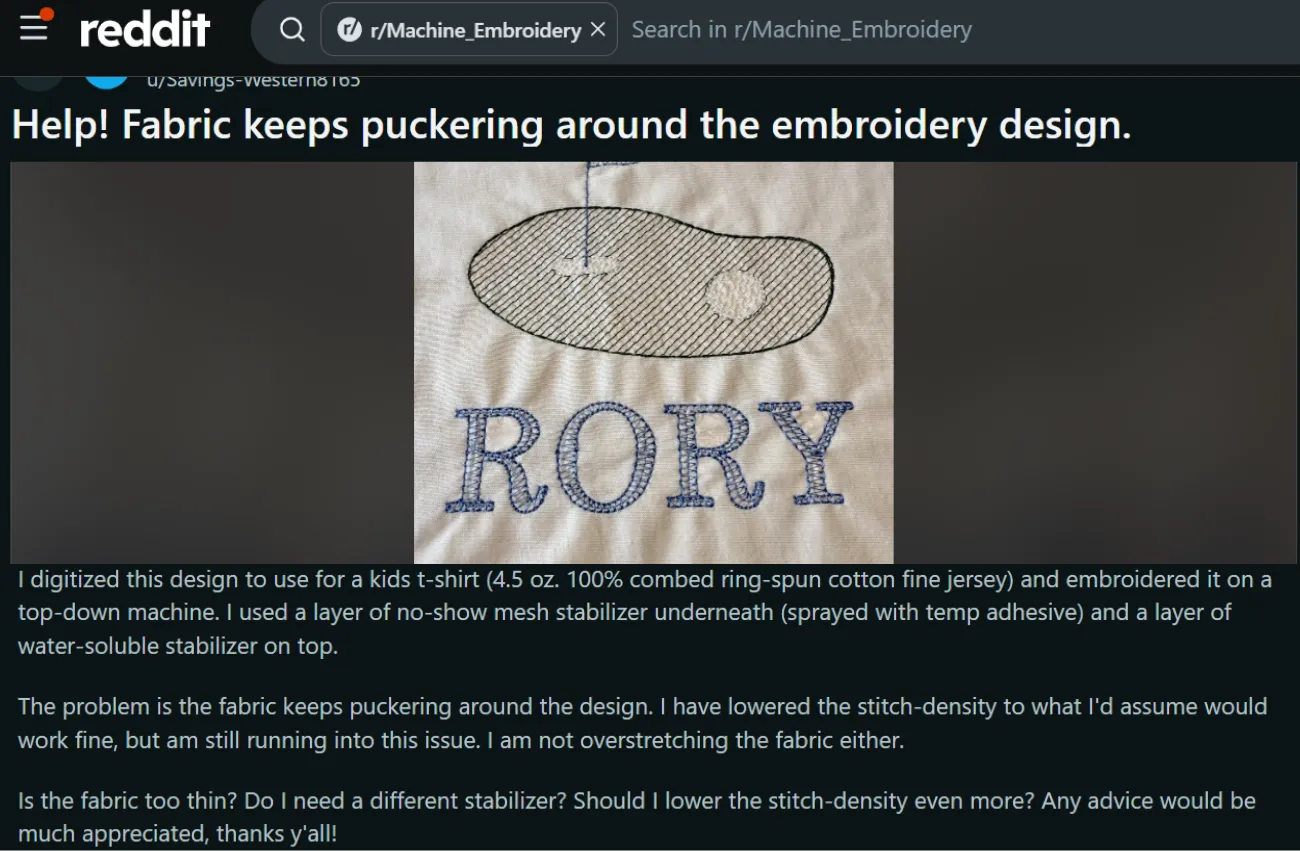
In a Reddit discussion, a user reported puckering while embroidering a design on a lightweight, 4.5-ounce cotton T-shirt. The problem continued even after reducing stitch density and using stabilizer.
Thin, stretchy fabric can pull around dense stitches. To reduce puckering, use suitable cut-away backing, avoid stretching during hooping, and adjust the design’s density when needed.
Why Do Some Blank Hats Cause Poor Lettering?
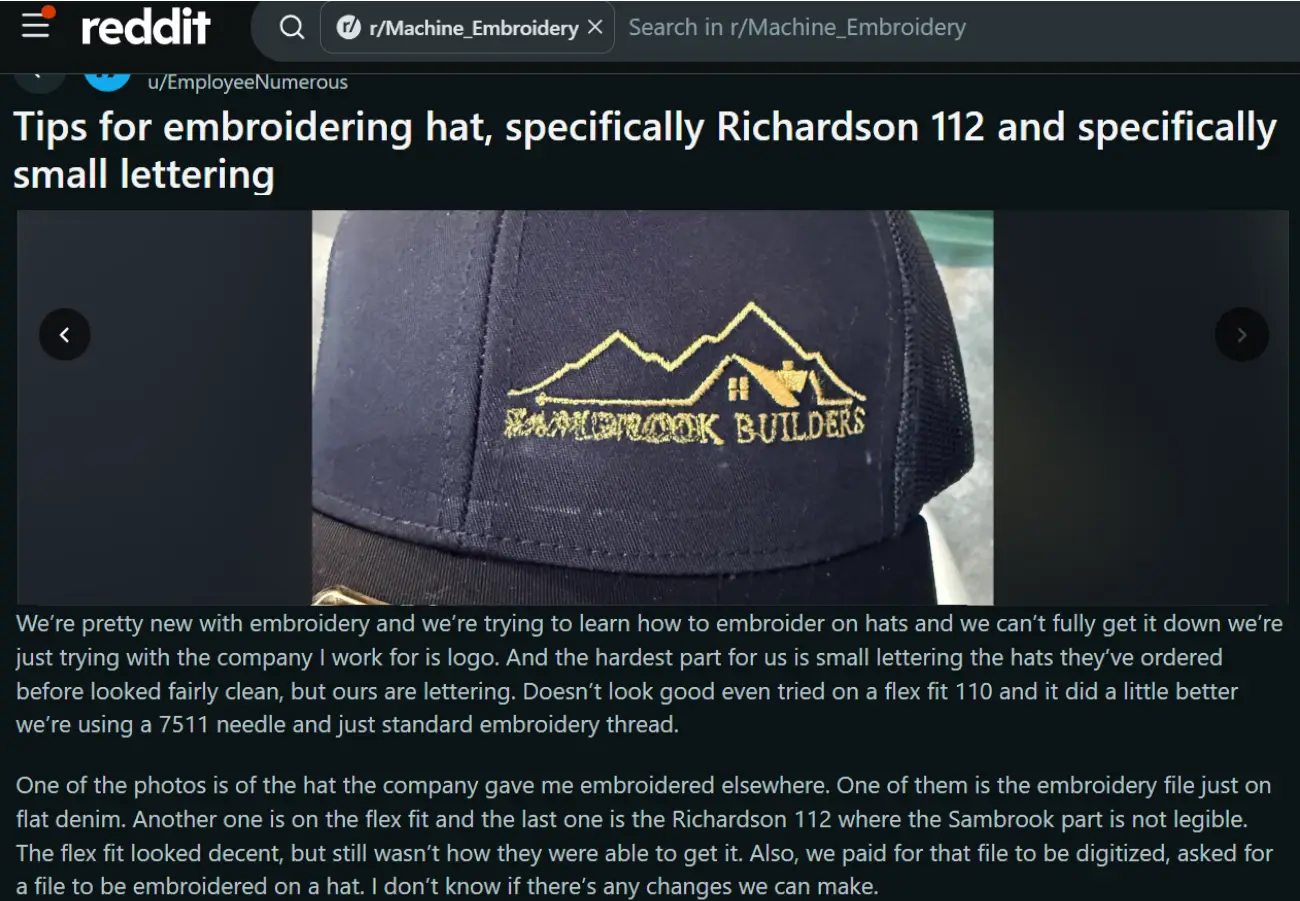
Another Reddit user shared how small lettering became hard to read on a Richardson 112 cap. The same logo looked somewhat better on a Flexfit 110.
The cap’s curved shape, firm front, and framing can affect lettering. Check hooping, cap clearance, and stitch settings. Also, use digitizing designed for small lettering rather than relying on a flat embroidery file.
In both cases, test your design on the actual blank before producing customer orders.
What Do Professional Digitizers Recommend When Choosing Blanks?
An embroidery blank should match the logo, not just the budget. Before ordering, check fabric stretch, stitching area, and whether you can hoop the item securely.
Match the Blank to Your Project
- Small chest logos: Choose stable knits and use cut-away backing to support the stitches.
- Corporate uniforms: Pick consistent fabric, clear logo placement, and colors you can reorder.
- Detailed cap logos: Check crown height, front seams, and cap-frame clearance before choosing a design size.
- Large shirt designs: Avoid heavy fill stitching on very thin, stretchy fabric.
- Beginner practice: Buy a few affordable samples and start with simple logos.
Why Cap Designs Need Special Care
A logo that stitches neatly on a pique polo may shift on a curved cap. The digitizer may need to adjust stitch settings.
On caps, stitching from the lower center outward often improves alignment.
How Embroidery Digitizing Affects Shirts and Hats
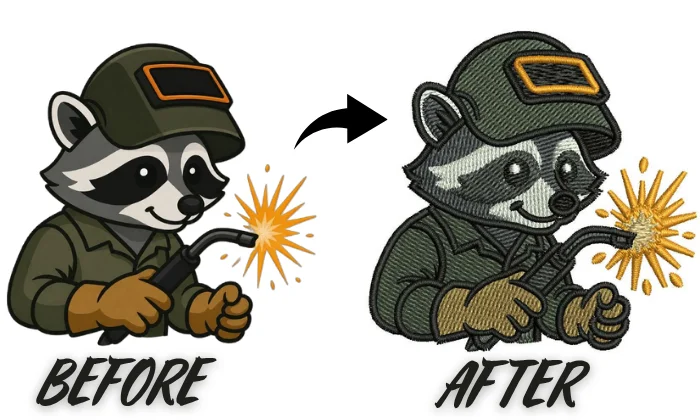
Even the right blank cannot fix a poorly planned stitch file. Digitizing controls how each part of your logo stitches onto the fabric. Underlay supports the design, while stitch density and pull compensation help prevent gaps, puckering, and distorted edges.
Why a Shirt File May Not Work on a Hat
Shirts lie flatter in a hoop. Caps curve around a firm front and may have a center seam. Therefore, cap embroidery often needs a different stitch order, working from the lower center outward to control fabric movement.
Before a bulk order, test the design on the actual blank and adjust any problem areas.
Picked your shirt or cap? Share the garment model, logo size, and machine format with Digitizing Buddy for a file planned around your project.
Final Thoughts
The best blank shirt or hat is the one that fits your design and stitching needs. Choose stable fabric for detailed logos, and check cap panels, seams, and available embroidery space before buying.
Also, choose a supplier with reliable stock, clear return rules, and reasonable shipping costs. Order samples before buying in bulk, then run a test sew-out to catch puckering, shifting, or uneven stitches.
Finally, remember that shirts and caps need different digitizing settings. Match the stitch file to your garment for cleaner results. Ready to start your next project? Share your artwork and garment details with Digitizing Buddy and get a free quote for custom embroidery digitizing.
Frequently Asked Questions
Not always. Hats have curved surfaces, seams, and smaller stitching areas. A design made for a flat shirt may need changes to stitch order, density, and pull compensation before it works well on a cap.
Comfort Colors 1717 has thicker, 6.1-ounce fabric that often suits heavier logos. BELLA+CANVAS 3001 is lighter at 4.2 ounces and works better with small, less dense designs. Both need proper backing.
You don’t always need to prewash blanks. However, washing a sample helps you check shrinkage, color changes, and fabric movement. This is especially useful before producing embroidered shirts in bulk.
Fabric shrinkage, weak backing, or dense stitching can cause puckering after washing. Use suitable cut-away stabilizer, avoid stretching the shirt during hooping, and test your digitized design on the actual fabric.
The thick center seam creates an uneven stitching surface. This can increase needle stress and cause thread breaks. Check the framing, needle condition, and design placement. Avoid placing narrow satin stitches directly across the seam when possible.
ShirtSpace sells blank Richardson, Flexfit, and other popular cap styles without minimum order quantities or a resale permit. You can purchase a single hat to test your embroidery before placing a larger order.