
| Quick Summary |
|---|
A successful home embroidery business starts with a clear niche, careful pricing, and a reliable production plan.
|
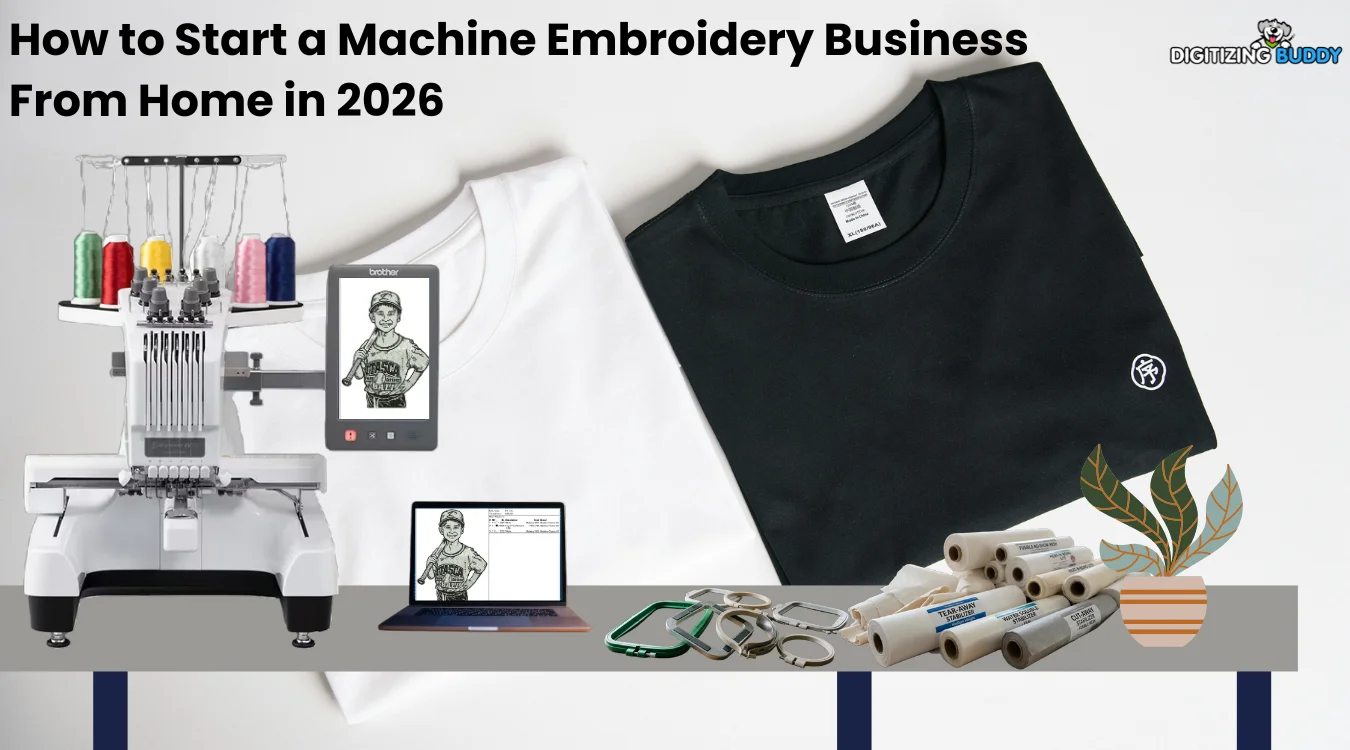
Buying an embroidery machine is a big step, especially when you are unsure what to sell, how to price orders, or where to find customers. Starting without a plan can quickly waste money and time.
However, this guide will help you choose a profitable niche, plan startup costs, select the right equipment, set fair prices, manage digitizing, and reach your first buyers.
Digitizing Buddy supports new embroidery businesses with precise custom digitizing for embroidery machines that turns artwork into clean, stitch-ready designs.
- Quick Answer: How to Start a Home Embroidery Business?
- Is a Home Machine Embroidery Business Profitable?
- Choose Your Niche Before Buying a Machine
- How Much Does It Cost to Start a Home Embroidery Business?
- What Equipment Does a Home Embroidery Business Need?
- What Embroidery Products Offer the Best Profit Potential?
- Build a Repeatable Embroidery Order Workflow
- How Should You Price Custom Embroidery?
- How Can You Find Your First Embroidery Customers?
Quick Answer: How to Start a Home Embroidery Business?
You can start a home embroidery business with one reliable machine and a clear customer niche. However, protect your budget by keeping the setup simple.
A Simple Starting Plan
- Choose products people already buy.
- Use supplies suited to each fabric.
- Price every cost, including digitizing.
- Test local demand before upgrading.
Profit grows through quality work, repeat orders, and sales.
Is a Home Machine Embroidery Business Profitable?
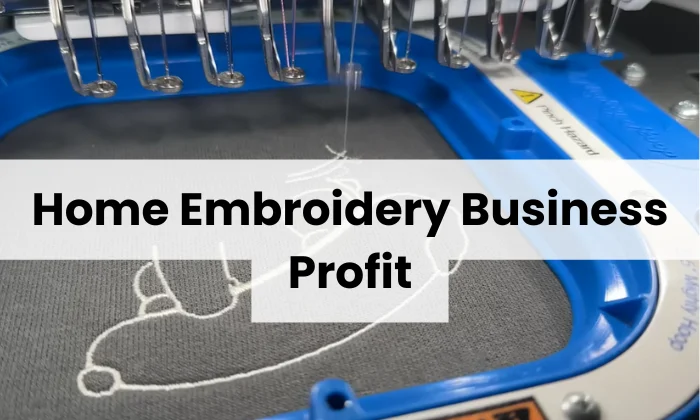
Yes, a home embroidery business can be profitable because custom stitching adds value to plain shirts, caps, bags, and uniforms. However, sales revenue is not the same as profit. You must subtract supplies, labor, fees, maintenance, and overhead.
Repeat orders from schools, clubs, workwear clients, and local businesses can create steadier income. Still, rejects, machine downtime, slow production, and low pricing reduce margins. Therefore, begin as a side hustle until demand reliably supports full-time work.
Choose Your Niche Before Buying a Machine
Your niche should guide every buying decision, from hoop size to product pricing.
Who Will You Embroider For?
Local business customers may include:
- Contractors and service companies
- Restaurants, schools, and sports groups
- Clubs, nonprofits, event teams, and clothing brands
Personalized-product customers may include:
- Wedding buyers, pet owners, and gift shoppers
- Families ordering names or monograms
- Customers wanting jackets, bags, or towels
Therefore, choose your audience before selecting the machine type, hoop sizes, product range, and prices.
How Much Does It Cost to Start a Home Embroidery Business?
There is no single startup price because your machine, products, and sales plan shape the budget. Therefore, list every cost before placing orders.
Startup Budget
| Expense | What to Include |
|---|---|
| Embroidery machine | Single-needle or multi-needle model |
| Hoops and attachments | Standard hoops, magnetic hoops, and cap frame |
| Production supplies | Thread, bobbins, needles, backing, and topping |
| Design preparation | Digitizing software or outsourced digitizing |
| Sample inventory | Polos, caps, towels, bags, or patches |
| Workspace | Strong table, storage, lighting, and surge protection |
| Business costs | Registration, permits, insurance, and banking |
| Selling costs | Website, marketplace fees, packaging, and shipping |
Machine prices vary widely.
Brother currently lists the single-needle PE900 at $1,179.99. Meanwhile, Ricoma lists its ten-needle EM-1010 from $5,499, and Janome shows a $9,999 MSRP for the seven-needle MB-7. However, promotions, dealer pricing, taxes, accessories, and delivery can change the final cost. Start with equipment that matches real orders, not future guesses.
Watch this short and helpful video for a practical breakdown of the real costs involved in starting an embroidery business at home, from equipment and supplies to other often-overlooked expenses.
What Equipment Does a Home Embroidery Business Need?
Six Essential Tools
- Embroidery machine: A single-needle model suits small orders. Meanwhile, a multi-needle machine handles color changes and repeat work faster.
- Computer and digitizing setup: Store artwork, mockups, customer details, and records. You also need digitizing software or professional support to turn logos into machine-readable stitch files.
- Hoops and placement tools: Use standard hoops, magnetic hoops, rulers, templates, and cap equipment when needed.
- Thread, bobbins, and needles: Match thread weight, needle size, and needle point to each fabric.
- Stabilizers and toppings: Use cut-away for stretch, tear-away for woven fabric, water-soluble topping for textured items, and firm cap backing.
- Finishing and maintenance tools: Keep snips, tweezers, a seam ripper, oil, brushes, spare needles, and a tension gauge.
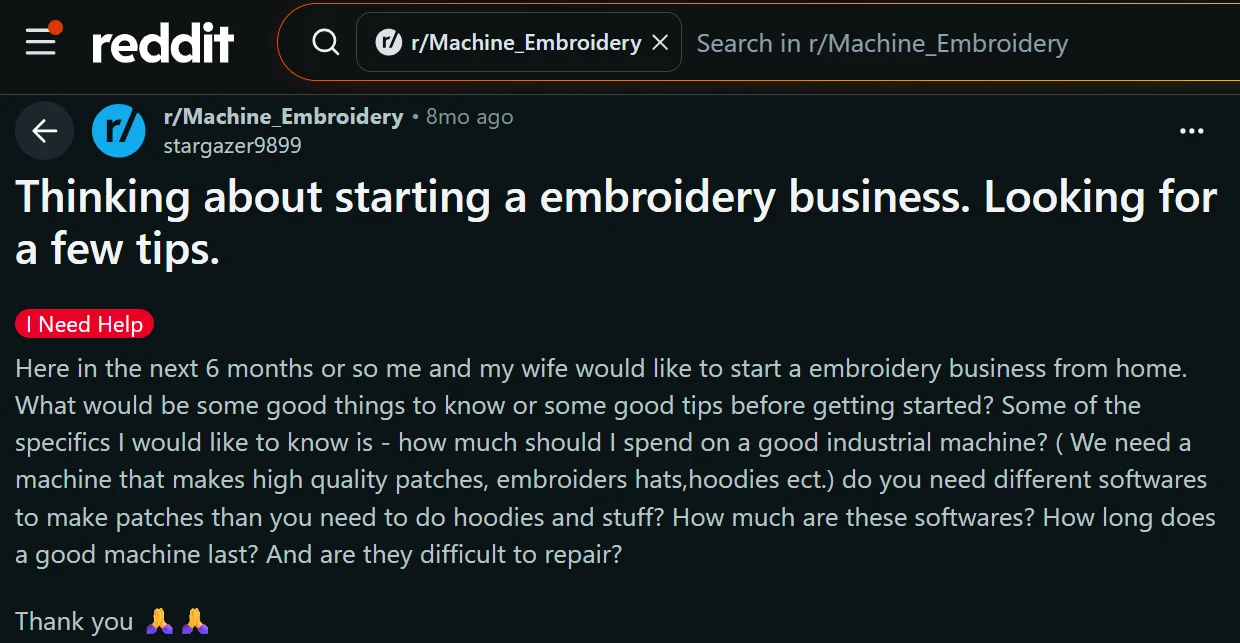
Many beginners share the same concerns before buying their first commercial embroidery machine. They want to know how much to spend, which software they need, and whether one setup can handle patches, caps, hoodies, and other products.
In addition, machine life, repair access, and long-term support can affect the true cost of ownership. For this reason, compare features, training, warranty, and local service options before making a major investment.
How Do You Choose the Right Machine?
| Single-Needle Machine | Multi-Needle Machine |
|---|---|
| Lower starting cost | Higher starting cost |
| Manual thread color changes | Automatic color changes |
| Easier to store | Needs more space |
| Best for smaller flat items | Better for caps and repeat orders |
However, compare hoop area, speed, cap support, file compatibility, warranty, repair access, weight, and noise before buying.
What Embroidery Products Offer the Best Profit Potential?
Profit depends on your costs, production time, and customer demand. Therefore, group products by buyer need instead of chasing one supposed best seller.
Products for Repeat Local Orders
- Logo polos and work shirts
- Uniform jackets, caps, and beanies
- Staff aprons and name patches
Personalized Products
- Tote bags and towels
- Wedding napkins and monogrammed gifts
- Denim jackets and pet-themed items
What Is Trending in Embroidery in 2026?
Etsy’s spring and summer 2026 report shows strong growth in searches for embroidered straw bags, embroidered bags among Gen Z, and embroidered jeans. It also highlights personalized keepsakes and embroidered wedding details.
However, test trends with small product runs, then rely on local demand and real sales data before expanding.
Build a Repeatable Embroidery Order Workflow
A clear workflow reduces mistakes and keeps every order consistent.
Order Process
- Collect the design, product, size, placement, colors, quantity, and deadline.
- Prepare or outsource the digitizing.
- Send a size and placement proof.
- Test the design on similar fabric.
- Fix density, underlay, pathing, tension, or stabilizer issues.
- Complete, inspect, trim, clean, fold, and package the order.
- Save the approved file and order details for reorders.
A JPG, PNG, PDF, or vector file cannot simply be renamed as an embroidery format. It must be converted into stitch commands.
Should Home Businesses Outsource Embroidery Digitizing?

Professional embroidery digitizing software can be expensive, especially when you are still testing demand. In addition, learning embroidery stitch types, density, underlay, pathing, pull compensation, and fabric settings takes time and practice.
Outsourcing can reduce that learning burden. A skilled digitizer can turn customer artwork into machine-ready files, prepare the correct format, and adjust the design for the chosen fabric and size. As a result, you may avoid poor sew-outs, wasted garments, broken threads, and long editing sessions.
Meanwhile, you can focus on production, customer service, pricing, and sales. For accurate files that support smoother stitching, send your artwork to Digitizing Buddy and request an instant free quote.
How Should You Price Custom Embroidery?
Do not price every job only by stitch count. It affects machine time, but it cannot show all the work behind an order.
Recommended Pricing Formula
Selling price = blank product cost + product markup + supplies + digitizing or setup + preparation time + machine time + finishing + overhead and fees + profit
Also Include These Costs
- Difficult hooping and thread changes
- Special backing and test sew-outs
- Individual names and design edits
- Trimming, cleaning, and finishing
- Rush work and replacement risk
- Marketplace and payment fees
Therefore, set a minimum price per item and a minimum order value. These limits help small jobs cover setup, communication, hooping, and machine preparation.
For customer-supplied garments, charge a higher decoration fee and use a written damage policy. Rare or sentimental items may be impossible to replace. In addition, explain this risk before accepting the order.
Finally, review labor, machine time, waste, and overhead often. Industry guidance warns that stitch-only pricing can hide setup, handling, maintenance, and job complexity.
How Can You Find Your First Embroidery Customers?
Finding customers is easier when you promote one clear offer to one buyer group. Start with six to ten polished samples for your chosen niche. Then photograph the stitching, backing, placement, and finished product.
Focused Launch Plan
- Create a simple price guide for your main products.
- Contact local companies with a sample that fits their needs.
- Set up a Google Business Profile for local searches.
- Share sew-outs and process videos on social media.
- List selected personalized items on an online marketplace.
- Ask early buyers for reviews and referrals.
In addition, save approved files, colors, garments, and placement details. This makes repeat orders faster and easier.
A Practical 30-Day Home Embroidery Business Launch Plan
Week 1: Research
Choose your niche, study local competitors, set a budget, and check home-business rules.
Week 2: Test
Prepare designs, buy sample products, run sew-outs, and record the settings that produce clean results.
Week 3: Build
Create product photos, pricing, policies, order forms, and an online business profile.
Week 4: Sell
Contact local prospects, publish selected products, request referrals, and track every cost.
However, avoid major equipment upgrades until steady order volume proves the need.
Final Thoughts
A strong home embroidery business starts with a clear niche and a simple plan. Choose equipment based on the products you expect to sell, not on future guesses. Also, include every cost in your pricing, from supplies and digitizing to finishing and fees.
Meanwhile, test each design before full production. This helps protect garments, improve stitch quality, and reduce wasted time. In addition, create a reliable workflow for proofs, production, inspection, and delivery. Upgrade your machine only when steady repeat orders support the cost.
For clean, machine-ready embroidery files, contact Digitizing Buddy and request a free digitizing quote today.
Frequently Asked Questions
It can be profitable when your prices cover supplies, labor, machine time, fees, and overhead. However, sales do not equal profit. Track your break-even point and focus on repeat orders from businesses, schools, teams, and local groups.
There is no fixed startup amount. Your budget should include a machine, hoops, thread, stabilizers, needles, digitizing, samples, insurance, registration, marketing, and packaging. Therefore, calculate every expense before buying equipment or accepting orders.
Yes. A single-needle machine can handle samples, monograms, personalized gifts, and smaller flat-item orders. However, a multi-needle machine saves time on repeated color changes and higher-volume work. Upgrade only when regular sales justify the cost.
No. You can outsource digitizing while you focus on stitching, sales, and customer service. Professional digitizing requires time to learn stitch types, density, underlay, pathing, and machine formats. Outsourcing can also reduce software costs and failed test sew-outs.
Beginners should start with simple, repeatable items such as logo polos, caps, tote bags, towels, name patches, and monogrammed gifts. Choose a few products for one clear customer group. This makes pricing, testing, marketing, and order handling easier while reducing wasted supplies.