
Quick Summary
|
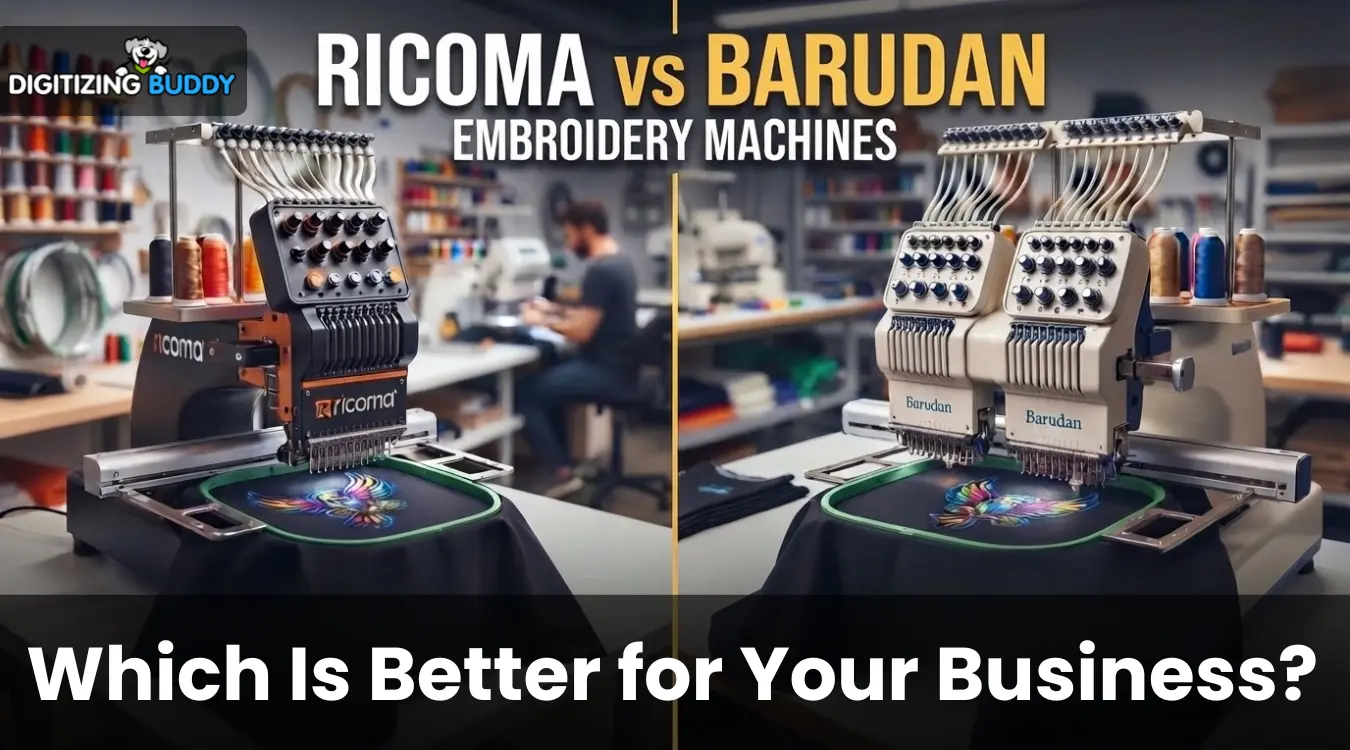
Choosing the right commercial embroidery machine is an important decision for any embroidery business. The machine can affect stitch quality, production speed, operating costs, maintenance needs, and the types of orders a business can handle. Ricoma and Barudan are two well-known brands, and different types of users choose each one for different needs.
Startups, home-based businesses, and growing embroidery shops often choose Ricoma machines for their accessible features and user-friendly controls. Established commercial operations often choose Barudan machines for their industrial construction and consistent performance.
However, the machine alone does not guarantee a good sew-out. The quality of the embroidery file also plays a major role in the final result. Choose quality embroidery digitizing services to create machine-ready files for Ricoma, Barudan, and other commercial embroidery machines.
- Quick Summary
- 2. Ricoma Embroidery Machines Overview
- 3. Barudan Embroidery Machines Overview
- 4. Ricoma vs Barudan: Quick Comparison
- 5. Price and Overall Value
- 6. Stitch Quality and Design Performance
- 8. Speed, Reliability, and Production Capacity
- 10. Which Machine Is Better for Your Business?
- 11. Final Verdict: Ricoma or Barudan?
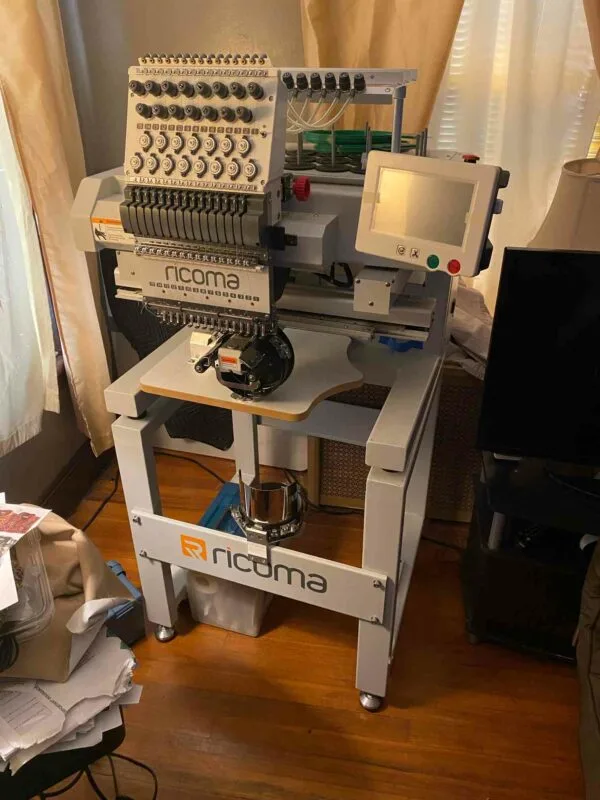
2. Ricoma Embroidery Machines Overview
Startups, home-based businesses, and growing embroidery shops often choose Ricoma machines for their user-friendly controls and accessible features. Established commercial operations often choose Barudan machines for their durable industrial construction and consistent performance.
Who are Ricoma machines suitable for?
- Home-based embroidery businesses
- Startups and small shops
- Custom apparel companies
- Growing commercial embroidery businesses
- Businesses handling both small and bulk orders
Ricoma offers several machine types, including single-head, two-head, three-head, and larger multi-head embroidery machines. Depending on the model, machines may come with 10, 15, or 20 needles.
Main advantages of Ricoma machines include:
- User-friendly touchscreen controls
- Different models for different production needs
- Ability to embroider caps, garments, bags, and patches
- Single-head options for custom orders
- Multi-head options for faster bulk production
- Training and support through authorised dealers
However, the experience may vary depending on the model and local distributor. Some users report smooth operation and helpful technical support, while others mention that setup and troubleshooting can take time.
Before buying, businesses should check:
- Availability of local technicians
- Cost and availability of spare parts
- Warranty coverage
- Operator training
- After-sales support
Overall, Ricoma may be a practical choice for businesses looking for accessible commercial embroidery equipment with room to expand.
3. Barudan Embroidery Machines Overview
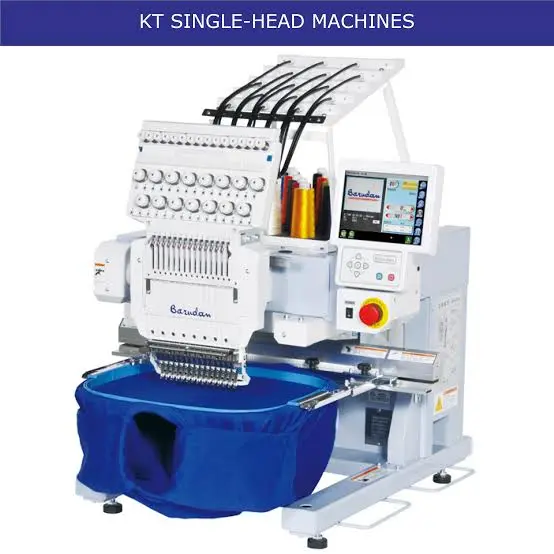
Barudan designs its embroidery machines mainly for commercial and industrial production. The company offers single-head machines for customized work and multi-head systems ranging from two to 56 heads for larger production environments. Depending on the model, these machines can handle garments, caps, bags, shoes, workwear, and other products.
Who typically uses Barudan machines?
- Established embroidery shops
- Uniform and workwear suppliers
- Contract embroidery companies
- Businesses handling regular bulk orders
- Production facilities requiring multi-head machines
What are the main strengths of Barudan machines?
- Strong welded-frame construction
- Single-head and high-capacity multi-head options
- Precise stitching on lettering and detailed designs
- Suitability for long commercial production runs
- Models designed for delicate and thick materials
However, Barudan may require a higher initial investment than some entry-level alternatives. New operators may also need more time and training to understand its commercial controls.
Before purchasing, buyers should compare local dealer support, technician availability, spare-part costs, warranty terms, and the specific machine model required for their workload.
4. Ricoma vs Barudan: Quick Comparison
Ricoma and Barudan both offer commercial embroidery machines, but they generally appeal to different business needs. Startups and growing shops often choose Ricoma for its accessible features, while established businesses often choose Barudan for industrial production.
| Comparison area | Ricoma | Barudan |
|---|---|---|
| Price and investment | Generally more accessible for newer businesses | Usually requires a higher initial investment |
| Ease of use | User-friendly controls and a shorter learning curve | Commercial controls may require more training |
| Stitch quality | Good results with proper setup and digitizing | Known for precise and consistent stitching |
| Build quality | Suitable for general commercial production | Strong industrial construction |
| Production capacity | Suitable for small to large businesses, depending on the model | Well suited to regular, high-volume production |
| Maintenance | Local service quality may vary | Designed for long-term commercial use |
| Support | Often includes training and dealer support | Depends heavily on the authorised dealer network |
| Best-suited user | Startups and growing embroidery shops | Established and high-volume businesses |
These are general differences rather than fixed rules. The final choice should be based on the specific model, workload, available technical support, budget, and long-term production goals.
5. Price and Overall Value
The cost of an embroidery machine includes more than its purchase price. Startups and growing businesses often choose Ricoma for its accessible pricing and features, while established operations often invest more in Barudan for its industrial construction and durability.
Costs to consider before buying include:
- Machine purchase and delivery
- Installation and operator training
- Cap frames, hoops, stands, and accessories
- Embroidery software and design preparation
- Needles, bobbins, lubricants, and replacement parts
- Technician visits and possible production downtime
Ricoma packages may include accessories, training, or software, depending on the model and authorized dealer. This can reduce the initial setup cost for a new embroidery business. However, buyers should check exactly what each package includes instead of comparing machine prices alone.
Barudan may cost more initially, but established shops may value its durability, consistent output, and suitability for long production runs. A machine that experiences less downtime and performs reliably under heavy workloads may offer better long-term value.
Repair and maintenance costs also depend on local technician availability. Before choosing either brand, businesses should ask about warranty coverage, spare-part delivery times, service charges, and training support.
Ultimately, the better value is not always the cheaper machine. It is the machine that can meet production needs reliably while keeping operating costs and downtime under control.
6. Stitch Quality and Design Performance
Both Ricoma and Barudan machines can produce professional embroidery, but their performance depends on the design, fabric, setup, and operator experience. Barudan is often associated with consistent stitching during demanding commercial production, while Ricoma can also deliver clean results when the machine is correctly adjusted and the embroidery file is properly prepared.
This popular video offers a helpful side-by-side comparison.
How do they perform on different designs?
- Small lettering: Small text embroidery requires accurate stitch angles, suitable density, and proper underlay. Barudan often delivers strong precision, but Ricoma can also sew small lettering clearly with careful digitizing and correct tension settings.
- Detailed logos: Fine details require controlled stitch placement and a design that is simplified for embroidery.
- Fill stitches: Both brands can produce smooth fills, although poor density or unsuitable underlay may cause gaps, puckering, or excessive thread buildup.
- Satin stitches: Clean satin columns depend on the correct stitch width, pull compensation, and fabric support.
- Caps: Cap embroidery can be challenging because of the curved surface. Proper center-out digitizing, cap framing, and slower operating speeds can improve registration.
- Difficult fabrics: Stretchy, lightweight, thick, or textured materials may require suitable embroidery stabilizers, needles, and digitizing methods.
- Long production runs: Barudan’s industrial positioning may suit continuous bulk production, while the suitability of a Ricoma machine depends on the model and workload.
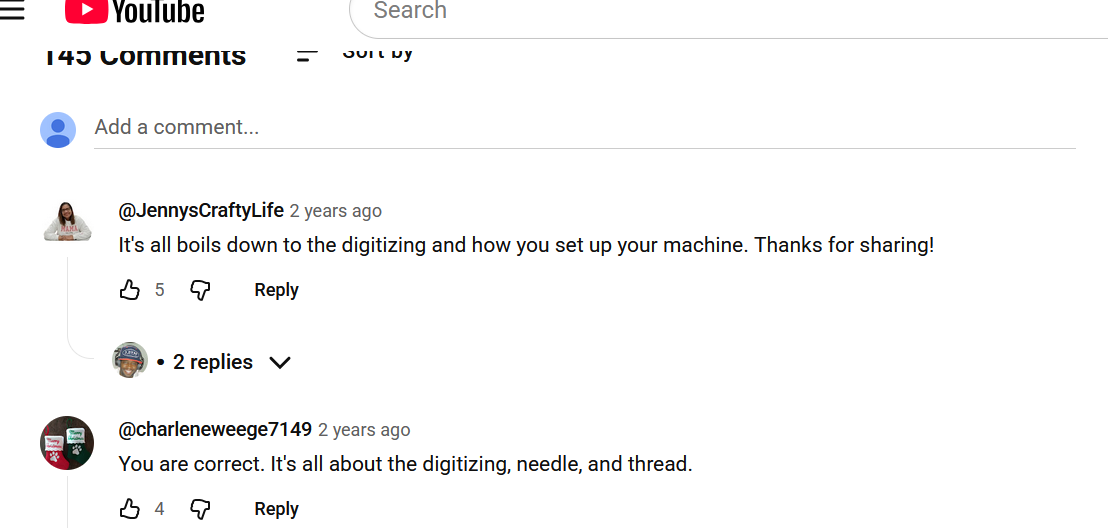
Machine brand alone does not determine sew-out quality. Results also depend on professional digitizing, stabilizer selection, thread quality, needle type, hooping, tension, and regular machine maintenance.
8. Speed, Reliability, and Production Capacity
Advertised speed does not always equal real production speed. Manufacturers list the maximum stitches per minute under suitable conditions, but operators often reduce speed for caps, small lettering, thick materials, metallic thread, or designs with frequent trims and color changes. Ricoma and Barudan models vary by series, so buyers should compare the exact machine rather than the brand name alone.
How does machine configuration affect production?
- Single-head machines are flexible for samples, personalized items, short runs, and orders requiring different designs.
- Multi-head machines embroider the same design on several garments at once, making them more efficient for uniforms, workwear, caps, and repeated bulk orders.
- More heads increase output only when the shop has enough orders, operators, workspace, and finishing capacity to keep the machine productive.
Ricoma offers single-head and multi-head options, including industrial models designed for bulk production. Barudan also supplies single-head machines and multi-head systems for smaller shops and large production lines. Both brands advertise reinforced frames, controlled drive systems, and commercial operating speeds on selected models.
Reliability is measured by downtime, not only sewing speed. Thread breaks, poor hooping, unsuitable digitizing, missed maintenance, slow repairs, and unavailable parts can reduce daily output. One experienced forum contributor stressed that service availability should be a major purchasing factor, while another reported improved hat production after moving to a Barudan six-head machine. These are individual experiences, but they show why local support and real workflow testing matter.
9. Maintenance, Parts, and Technical Support
Regular maintenance is essential for keeping any commercial embroidery machine reliable. Both Ricoma and Barudan machines require routine cleaning, oiling, needle replacement, bobbin checks, and tension inspection. Ignoring these basic tasks can lead to machine thread breaks, uneven stitching, registration problems, and unnecessary downtime.
What should buyers check before purchasing?
- Availability and cost of spare parts
- Access to trained local technicians
- Dealer response time
- Warranty coverage and exclusions
- Installation and operator training
- Remote troubleshooting support
- Expected repair turnaround time
Ricoma often promotes training and technical support through its dealer network, although the quality and speed of service may vary by location. Barudan is known for commercial use, but buyers should still confirm whether authorized technicians and replacement parts are easily available in their area.
A durable machine can still become costly if a small part takes weeks to arrive or no qualified technician is nearby. For this reason, local support may be more important than a minor difference in speed or features.
Before choosing either brand, contact existing customers in your region and ask about repairs, parts, training, and after-sales service. Reliable local support can reduce downtime and protect long-term production.
10. Which Machine Is Better for Your Business?
The better machine depends on your budget, production volume, operator experience, and plans for business growth. Ricoma may be more suitable for newer or expanding shops, while Barudan may appeal more to established businesses handling demanding production.
Choose Ricoma if:
- You are starting a home-based or small embroidery business
- You want controls that may be easier for a new operator to learn
- You have a more limited initial equipment budget
- You mainly handle personalised items and small or medium orders
- You want a single-head machine for samples and custom jobs
- You need the flexibility to expand into multi-head production later
Ricoma can be a practical option for businesses that want to enter commercial embroidery without immediately investing in a heavier industrial setup. However, buyers should still confirm local service, training, and parts availability.
Choose Barudan if:
- You operate an established embroidery shop
- You regularly produce uniforms, caps, workwear, or other bulk orders
- Industrial durability and long production runs are priorities
- You have trained or experienced machine operators
- You want consistent output across repeated commercial orders
- You can support a higher initial investment

Barudan may provide stronger long-term value for businesses where machine downtime can delay large orders and reduce revenue. However, machine performance also depends heavily on the quality of the digitized embroidery file. Proper stitch types, density, underlay, and sequencing can improve production speed, reduce thread breaks, and deliver cleaner results on both Ricoma and Barudan machines. For reliable, machine-ready embroidery files, work with an experienced digitizing team that understands commercial production requirements.
11. Final Verdict: Ricoma or Barudan?
Neither Ricoma nor Barudan is the best choice for every embroidery business. The right machine depends on your budget, production volume, operator experience, available technical support, and long-term business plans.
Ricoma may be a more accessible option for startups, home-based businesses, and growing embroidery shops. Its user-friendly controls and range of single-head and multi-head machines can make it suitable for businesses handling small to medium production runs.
Barudan may be better suited to established commercial operations that regularly handle bulk orders. Its industrial construction, production stability, and reputation for consistent performance can be valuable for businesses where downtime and delayed orders can be costly.
Before making a decision, compare specific models rather than relying only on the brand name. Check the warranty, included accessories, training, local technician availability, spare-part supply, and expected daily output. Whether you choose a Ricoma or Barudan machine, the quality of the embroidery file directly affects the final sew-out. Digitizing Buddy creates professionally digitized files.
FAQs
Barudan is often preferred by established embroidery businesses that need industrial durability, stable performance, and reliable output during long production runs. Ricoma may be more suitable for startups and growing shops looking for easier controls and a lower entry barrier. The better choice depends on the specific model, workload, budget, and local technical support.
Ricoma is commonly considered beginner-friendly because many models include touchscreen controls, training resources, and features designed for small businesses. However, new operators still need to learn hooping, tension adjustment, machine maintenance, stabilizer selection, and embroidery digitizing basics.
Yes. Barudan offers single-head machines that can be used for custom orders, samples, and small production runs. However, the higher initial investment may not suit every startup. Buyers should compare expected order volume, financing, maintenance costs, and local support before purchasing.
Barudan is widely associated with demanding commercial production and long production runs. Its multi-head options may be suitable for uniforms, caps, workwear, and bulk orders. Ricoma also offers multi-head machines, but buyers should compare the capacity and specifications of individual models rather than judging only by brand.
Both Ricoma and Barudan can produce professional embroidery. Barudan is often recognized for precise and consistent commercial stitching, while Ricoma can also produce clean results when properly maintained and set up. Stitch quality also depends heavily on the digitizing, fabric, stabilizer, thread, needle, tension, and hooping.
Ricoma is generally positioned as a more accessible option for startups and smaller businesses, while Barudan often requires a higher initial investment. However, the total cost should also include accessories, installation, training, maintenance, repairs, spare parts, and possible production downtime.
Both brands offer machines capable of embroidering caps. Good cap embroidery depends on machine stability, cap-frame quality, correct hooping, operating speed, and specialized digitizing. Barudan is often chosen for high-volume cap production, while Ricoma may suit businesses handling smaller or mixed orders.
Supported formats vary by machine model. DST is widely used with commercial embroidery machines, while some models may accept additional stitch-file formats. Buyers should check the machine manual or dealer specifications before loading a design.
No. Standard image files such as JPG, PNG, PDF, AI, and EPS do not contain stitch instructions. The artwork must first be converted into a machine-readable embroidery file through professional embroidery digitizing.
Yes. Proper digitizing can reduce unnecessary thread breaks, excessive trims, fabric puckering, gaps, and registration problems. A well-prepared design also uses suitable stitch types, density, underlay, pull compensation, and sewing order for the selected fabric and placement.
Compare the specific model’s production capacity, number of needles and heads, included accessories, warranty, training, spare-part availability, technician access, dealer reputation, and repair response time. Local support can be more important than small differences in advertised speed.
Yes. Digitizing Buddy creates production-ready embroidery files for Ricoma, Barudan, and other commercial embroidery machines. Files can be prepared according to the design size, fabric, placement, stitch requirements, and supported machine format.