
| Quick Summary |
|---|
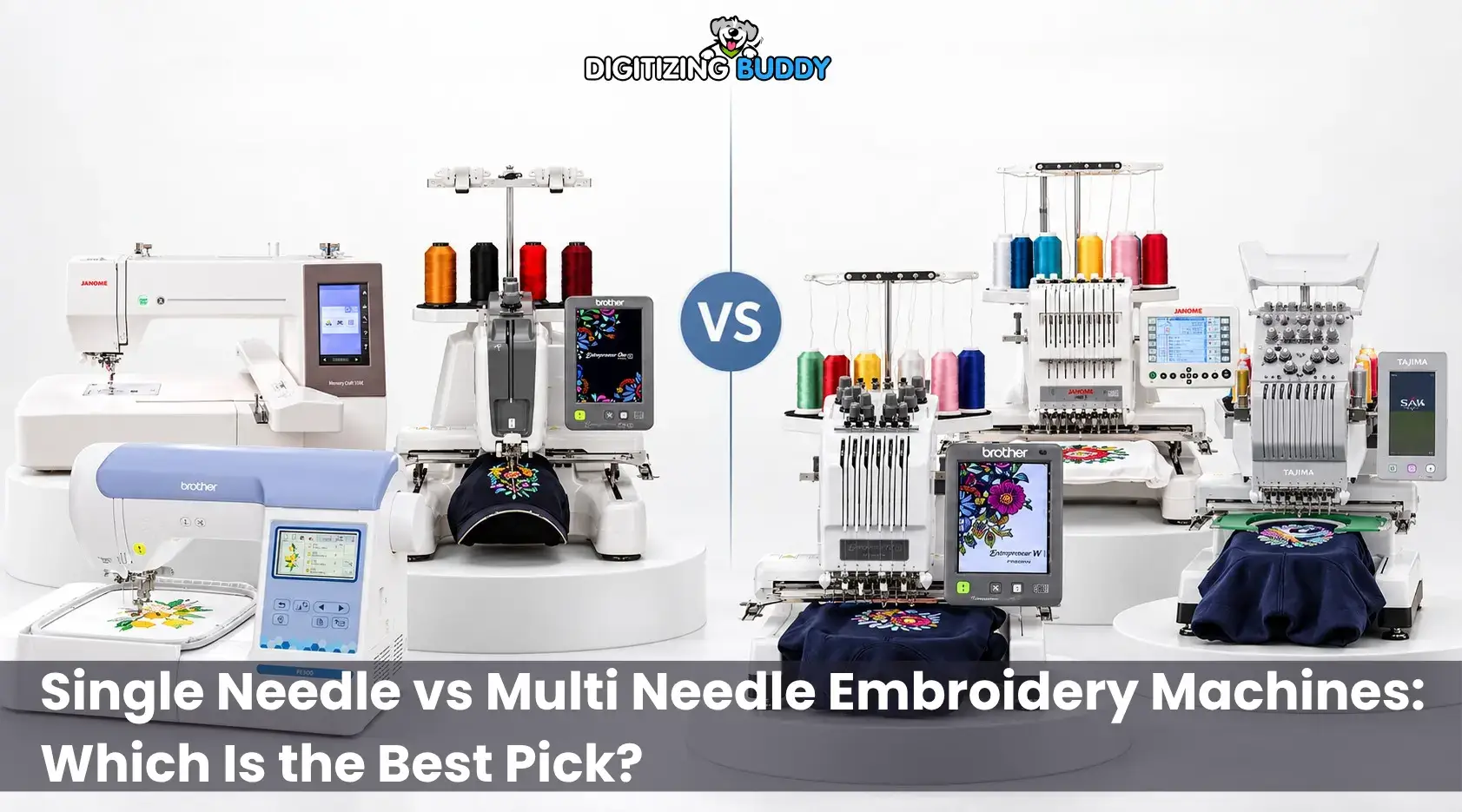
Single-needle machines suit smaller projects, while multi-needle machines save time on frequent multicolor orders.
|
Embroidering a few shirts at home is one thing. Finishing a 20-shirt logo order for a customer is another. With a single-needle machine, every color change means stopping to swap threads. Those pauses can slow down a busy workday.
Meanwhile, a multi-needle machine keeps several thread colors ready, but the higher price can make upgrading difficult. Speed, hoop size, and garment type also matter when choosing a machine.
Good embroidery starts with the right stitch file, too. Consider reliable embroidery digitizing services to prepare your logo for production.
This guide compares both machine types, their costs, practical uses, and recommended models.
- Quick Answer: Which Embroidery Machine Should You Choose?
- Understanding Single-Needle and Multi-Needle Embroidery Machines
- Single Needle vs Multi Needle: Key Differences
- How Much Do Single-Needle and Multi-Needle Embroidery Machines Cost?
- What Can You Embroider With Each Machine?
- How Much Faster Is a Multi-Needle Embroidery Machine?
- When Is the Right Time to Upgrade to a Multi-Needle Embroidery Machine?
- Best Single-Needle and Multi-Needle Embroidery Machines to Consider
- Is a Multi-Needle Machine Worth It for a Small Embroidery Business?
Quick Answer: Which Embroidery Machine Should You Choose?
Choose a single-needle embroidery machine for home projects or occasional orders. Pick a multi-needle machine when frequent color changes and repeat orders slow your work. Neither type guarantees better stitch quality.
Best Choice for Your Work
- Single-needle: Lower upfront cost and a simpler setup for beginners and hobbyists.
- Multi-needle: Holds several thread colors, switches between them automatically, and reduces stops during multicolor orders.
However, stitch quality also depends on the digitized file, fabric, stabilizer, hooping, and machine settings. Choose based on your workload, garment types, and budget.
Understanding Single-Needle and Multi-Needle Embroidery Machines
Both machines follow an embroidery file to stitch designs onto fabric. The main difference is how they handle thread colors. Their frames and daily workflow can also vary.
What Is a Single-Needle Embroidery Machine?
A single-needle machine stitches with one embroidery needle. When the design needs another color, it stops so you can replace the upper thread. Then you resume stitching.
Most home models use a flatbed setup, where the fabric rests on a wide sewing surface. These machines work well for names, small logos, and personal gifts. However, not every single-needle machine has the same frame design.
For example, the Brother PR1X has a free arm that makes it easier to reach sleeves, bags, and caps with compatible frames.
What Is a Multi-Needle Embroidery Machine?
A multi-needle machine keeps several needles threaded with different colors. It selects the needed needle as the design runs, so you do not have to rethread for every color change.
Common choices include six-needle Brother models, Janome’s seven-needle MB-7, eight-needle Tajima machines, and ten-needle systems. Many use a free-arm layout for finished garments, although features vary by model.
How Thread Colors Work
- Single-needle: Pause and change the upper thread between colors.
- Multi-needle: Load several colors once and let the machine switch between them.
A design with more colors than loaded needles may still need manual rethreading.
Single Needle vs Multi Needle: Key Differences
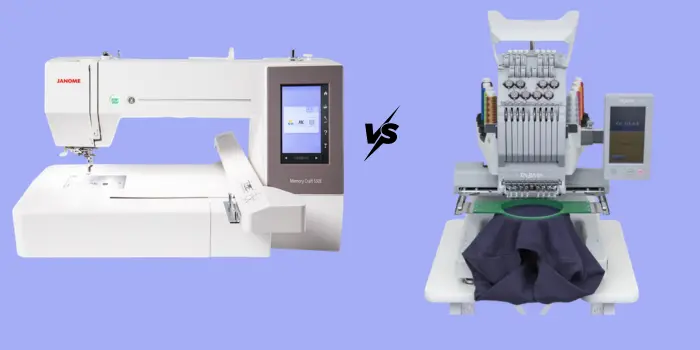
Both machine types produce clean embroidery but handle orders differently. Compare their features before choosing.
Main Differences at a Glance
| Feature | Single-Needle | Multi-Needle |
|---|---|---|
| Thread colors | Manual thread changes | Automatic switching between loaded colors |
| Speed | Depends on the model | Often saves time on multicolor jobs |
| Initial cost | Usually lower | Usually higher |
| Garment handling | Depends on machine design | Many offer tubular free arms |
| Maintenance | Usually simpler | More needles and thread paths to maintain |
| Best use | Individual projects and small orders | Frequent multicolor and repeat orders |
Why Needle Count Is Not Everything
More needles do not guarantee better stitches. Digitizing, thread tension, fabric, stabilizer, and hooping affect results.
Hoop size also varies by model. Some single-needle machines offer larger embroidery fields than compact multi-needle models. A multi-needle machine with one head still stitches one item at a time, not several shirts simultaneously.
Automatic color changes can reduce stops during repeat orders. However, a single-needle model may be enough for simple logos and smaller workloads. Consider garment access, upkeep, and customer demand before buying.
How Much Do Single-Needle and Multi-Needle Embroidery Machines Cost?
Embroidery machine prices vary by needle count, embroidery area, and features. While home models cost less, advanced single-needle machines can also be expensive.
Average Embroidery Machine Prices
- Basic single-needle machines: Around $400 to $1,800 for beginners and home projects.
- Advanced single-needle machines: Around $3,000 to $7,000 or more for larger fields and free-arm features.
- Multi-needle machines: Around $6,000 to $15,000 or more for many six to eight-needle models used by small businesses.
Additional Costs to Consider
Beyond the machine price, budget for hoops, cap frames, thread, stabilizer, maintenance, and repairs.
For example, the Brother PE900 costs around $1,180, while the six-needle Brother PR680W sells for around $13,000.
However, prices change by dealer and promotions. Compare your budget with expected orders and running costs before investing.
What Can You Embroider With Each Machine?
Both machine types can stitch logos, names, patches, and decorations. However, the machine frame and hoop options decide which garments fit comfortably.
Hats, Sleeves, and Finished Garments
Most home single-needle machines use flatbeds, which work best with flat fabric. Free-arm machines make it easier to stitch sleeves, bags, and finished clothing without catching extra layers.
Structured caps often require a compatible cap frame and driver. For example, some single-needle machines have a large embroidery field and free arm. With the right accessories, these machines can embroider caps too.
Logos, Patches, Monograms, and Large Designs
Both types handle logos, monograms, and patches when the design fits the embroidery field. Large jacket designs need enough hoop space, while stretchy shirts need proper stabilizer.
Always check design size, usable stitch area, and frame compatibility before accepting an order.
How Much Faster Is a Multi-Needle Embroidery Machine?
Manufacturers measure stitching speed in stitches per minute (SPM). However, this number does not show how long a complete order takes. Thread changes, hooping, trimming, and finishing also affect production time.
Example: 12 Shirts With Four Color Sections
Each shirt requires three color changes after the first color.
- Single-needle machine: 36 manual thread changes across 12 shirts.
- Multi-needle machine: Zero manual rethreadings when all four colors remain loaded.
As a result, a multi-needle machine can save time during multicolor orders, even when both machines stitch at similar speeds.
However, both machines still require hooping and finishing each shirt. This example shows potential workflow savings, not measured production time. Actual results depend on the design, machine settings, and operator.
When Is the Right Time to Upgrade to a Multi-Needle Embroidery Machine?
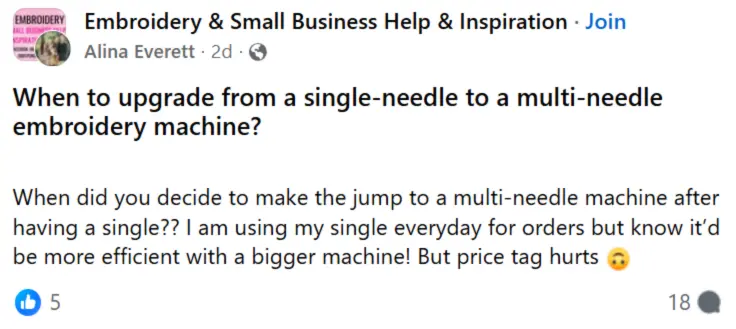
The right time to upgrade is when manual thread changes and slow production start costing you time, money, or customer orders. However, using your machine daily does not automatically mean you need a bigger one.
Signs You May Be Ready to Upgrade
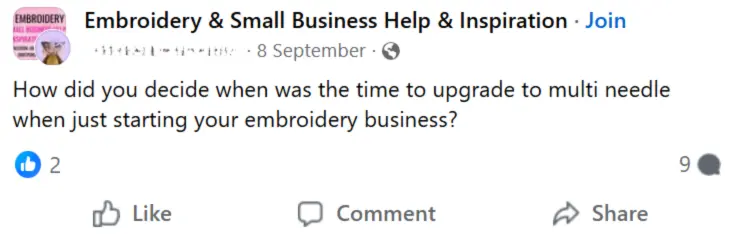
- Daily orders: Your machine stays busy with paid work.
- Thread changes: Frequent color switching slows down production.
- Lost orders: You miss deadlines or turn down customers.
- Growing demand: Customers request more multicolor designs, caps, or bulk orders.
- Production limits: Your current setup struggles to handle increasing workloads.
However, you may not need multiple needles for smaller orders or occasional projects. Some single-needle free-arm machines can also handle caps and tubular garments with compatible attachments.
Before upgrading, compare potential earnings and time savings with machine costs, accessories, and maintenance. If your current setup meets demand, keeping it may be smarter.
Best Single-Needle and Multi-Needle Embroidery Machines to Consider
Choosing a machine depends on your projects, order volume, and workspace. These six models cover home projects and growing shops. Compare their embroidery fields and limits, not just needle count.
Recommended Single-Needle Machines
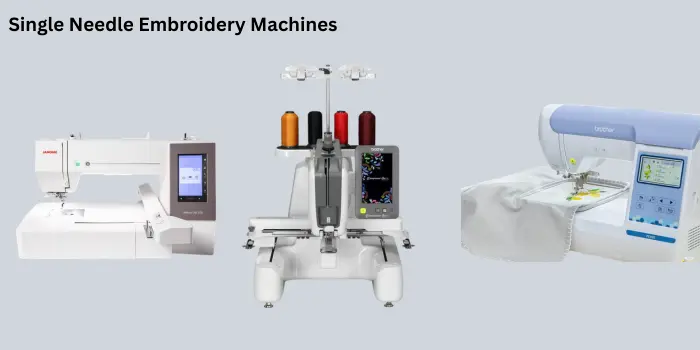
- Brother PE900: This one-needle machine has a 5 by 7 inch embroidery field and wireless design transfer. It suits beginners making names, gifts, and small shirt logos. However, its flatbed layout and smaller stitching area make large designs and difficult garment placements harder to handle.
- Janome Memory Craft 550E: This single-needle model offers a 7.9 by 14.2-inch field and USB design transfer. It is a strong choice for large quilt blocks, jacket backs, and flat fabric. However, it still requires manual thread changes, and its flatbed layout limits access to narrow garments.
- Brother PR1X: This one-needle, free-arm model provides an 8 by 12 inch embroidery field. It suits custom bags, sleeves, and caps when you use compatible frames. Its main trade-off is simple: you get better garment access, but you must still change thread colors yourself.
Recommended Multi-Needle Machines
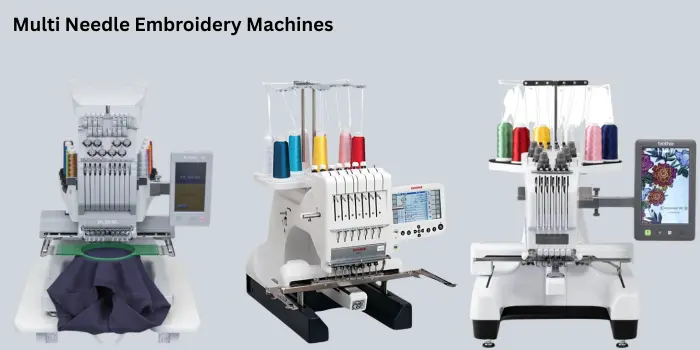
- Brother PR680W: With six needles and an 8 by 12 inch field, this machine fits growing shops handling repeat multicolor logos. It can change among six loaded colors automatically and offers free-arm access. However, it costs more than most home machines and needs more maintenance.
- Janome MB-7: This seven-needle machine covers up to 9.4 by 7.9 inches and accepts DST and JEF designs. It suits small businesses personalizing shirts, towels, and workwear. However, its smaller field may limit larger designs, and operators still need to manage seven thread paths.
- Tajima SAI: This eight-needle machine has a 7.8 by 11.8 inch field and supports optional cap frames. Its compact footprint suits retail personalization and small logo orders. However, its higher purchase cost and smaller field than some single-needle machines may not fit every business.
Before buying, check local service, included hoops, optional accessories, and dealer support. Those details can affect everyday work as much as specifications.
Is a Multi-Needle Machine Worth It for a Small Embroidery Business?
A multi-needle machine can be worth the investment when steady orders and frequent color changes slow down production. However, faster stitching does not always mean higher profits.
What Should You Calculate Before Buying?
Consider these factors before spending thousands on an upgrade:
- Order volume: Count monthly orders and the number of colors in each design.
- Time savings: Track how long manual thread changes delay production.
- Extra expenses: Include hoops, cap attachments, thread, servicing, and repairs.
- Monthly profit: Compare expected extra earnings with machine payments and running costs.
Meanwhile, beginners with occasional orders may benefit more from improving hooping, organizing similar jobs, and reducing wasted materials.
Upgrade when steady demand can support the investment, not simply because a larger machine looks faster.
Planning to start an embroidery business but unsure which machine to choose? Watch this video on single-needle vs multi-needle embroidery machines to explore your options before making an investment.
Why Proper Embroidery Digitizing Matters for Both Machines
A good embroidery machine still needs a well-digitized stitch file. The design must match your machine, final size, fabric, and placement. Otherwise, even a costly multi-needle machine may produce gaps, puckering, or uneven letters.
What Makes a Stitch File Work?
- Density: Keeps stitches from crowding the fabric.
- Underlay: Supports the design and helps hold its shape.
- Stitch direction: Controls how fills and borders look.
- File format: Matches the machine, such as PES, DST, or JEF.
Before your next shirt or cap order, request custom digitizing built for that fabric and placement. More needles cannot repair a poorly planned design.
Final Thoughts
Choosing between a single-needle and multi-needle embroidery machine depends on your workload, budget, and projects. A single-needle machine is a great starting point for beginners, hobbyists, and small custom orders.
However, a multi-needle machine makes more sense when frequent color changes, bulk orders, and tight deadlines slow down production. Before upgrading, consider machine costs, garment types, hoop sizes, and maintenance.
Remember, more needles do not guarantee better embroidery. A properly digitized design matters just as much as the machine you use.
Ready for your next embroidery project? Send your artwork to Digitizing Buddy for custom embroidery digitizing and get a free quote today.
Frequently Asked Questions
Yes. A single-needle machine can stitch designs with many colors. However, you must change the upper thread whenever the design calls for a different color.
Yes. A six-needle machine can stitch designs with more than six colors. You must rethread some needles when the design needs colors that are not already loaded.
Yes, but it depends on the machine and accessories. Free-arm models like the Brother PR1X can embroider structured caps with compatible cap frames. Regular flatbed machines have more limitations.
No. A single-head multi-needle machine stitches one item at a time. Multiple needles allow automatic thread color changes. You need a multi-head machine to embroider several shirts simultaneously.
Consider upgrading when frequent thread changes, large orders, or missed deadlines affect your earnings. Make sure steady customer demand can cover the machine’s purchase and maintenance costs.