Digitizing Buddy

How to Stop Thread Breaks on Your Embroidery Machine

Embroidery Machine

Few things are more frustrating than constant embroidery machine thread breaks in the middle of a design. Just when production starts flowing, the machine stops, the thread snaps, and you are left rethreading again and again. Over time, these interruptions do not just test your patience. They waste valuable production hours, increase labor costs, and … Read more

Left Chest Logo Embroidery Digitizing

Left Chest Logo Digitizing

Left chest logos look easy. They are small and sit in a clean spot. But that small size makes mistakes obvious. On polos and jackets, people expect sharp, premium branding. When left chest logo digitizing is not done right, issues show fast. Tiny text becomes unreadable. Edges look shaky. Fabric can pucker. Trims and jumps … Read more

How to Digitize Small Letters for Embroidery

Digitize Small Letters for Embroidery

Small lettering feels like the “easy part” of embroidery digitizing until you actually stitch it. On a screen, a 5 mm font looks crisp and perfect. On fabric, that same text can turn into a fuzzy, swollen line where letters merge, holes show, and the words become hard to read. The problem is not your … Read more

How FSL Embroidery Digitizing Works

How FSL Embroidery Digitizing Works

Freestanding Lace (FSL) embroidery creates lace using only thread. You stitch the design on water-soluble stabilizer, then dissolve the stabilizer in water. The lace stays as a standalone piece with no fabric backing. That clean, airy look is what makes FSL feel premium. When you digitize it the right way, it also stays strong and … Read more

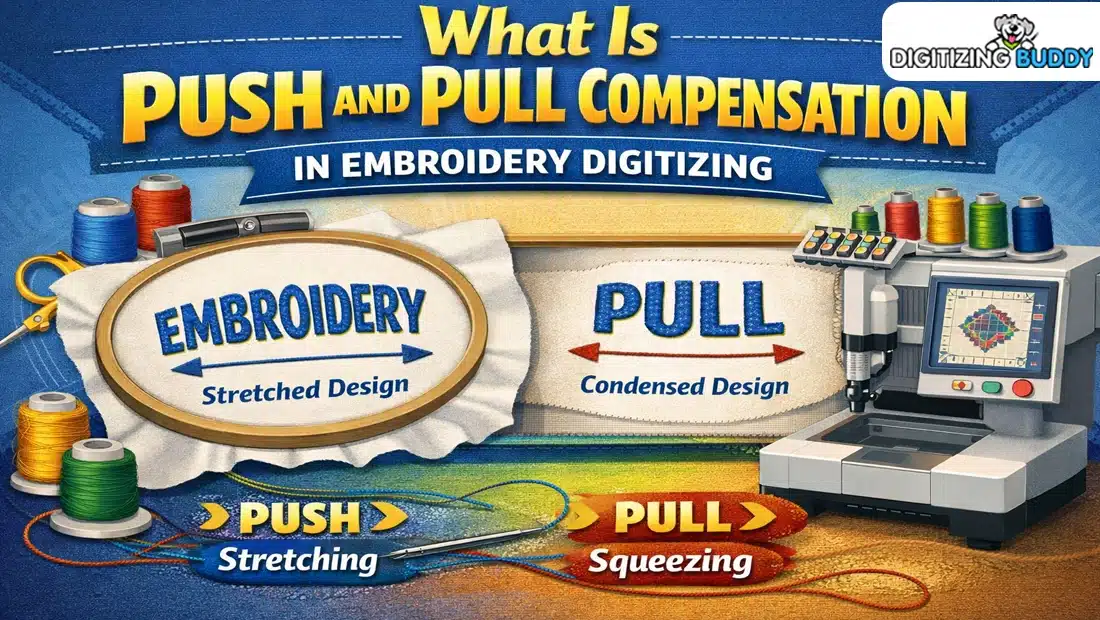
What Is Push and Pull Compensation in Embroidery Digitizing?

What is Push and Pull Compensation in Embroidery Digitizing

Circles on your screen look perfect, but on fabric they sometimes stitch out like eggs. Small text that looked sharp in the software can come out thicker, squeezed, or even unreadable. If you have seen that, you are not doing anything “wrong.” Fabric moves while the machine stitches, and that movement changes the final shape. … Read more

The 3 Main Machine Embroidery Stitches: Run, Satin & Fill

3 Main Machine Embroidery Stitches: Run, Satin & Fill

If you look closely at almost any machine embroidery design, you will see something simple. It uses just three stitch types. Run stitches create clean lines and fine details. Satin stitches form smooth borders and crisp lettering. Fill stitches cover larger areas, so the design looks solid and complete. Once you understand these three, you … Read more

OFM Embroidery File Conversion

OFM Embroidery File Conversion

Embroidery machines use different file formats to read stitch information, and OFM is one of the most advanced formats used mainly by Melco machines. Many embroiderers often need to convert OFM files because they work with multiple machine brands or receive artwork from clients who use different systems. While several tools allow basic conversion, getting … Read more

Custom Embroidered Gift Ideas for Christmas

Custom Embroidered Gift Ideas for Christmas

Christmas is a season of warmth, joy, and meaningful connections. It’s the perfect time to give gifts that feel personal and thoughtful. Instead of choosing something ordinary, custom embroidered gifts add a special touch that shows real effort and love. Whether it’s a cozy hoodie, a festive stocking, a baby blanket, or a decorative holiday … Read more

How to Convert an Image into a PXF File

How to Convert an Image into a PXF File

If you have ever tried turning a regular image or logo into something your embroidery machine can stitch, you have probably wondered, “How do I convert this into a PXF file?” This is a very common challenge for beginners and even for experienced embroiderers who have not worked with Pulse or Tajima systems before. A … Read more